East Asia (Fall) - Weeks 03 & 04
East Asia (Area Studies): Friday 2nd Period (金)2限
FRIDAY East Asia (Fall 2026)
下記の方法に従うこと
READ THE DIRECTIONS
Complete:October 2 [金] ~ October 15 [木] | |
提出期間 (10月2日 ~ 10月15日)Weeks 3 & 4 |
WEEK 03
Complete : 提出期限
October 8 (10pm) (Thursday)
10月8日 (22:00) (木)
WEEK 04
Complete : 提出期限
October 15 (10pm) (Thursday)
10月15日 (22:00) (木)
2026 Fall SemesterEast Asia (Friday) 2nd period10:50~12:30 [14 weeks] | ||
| Class Week | Day | Location |
| 1 | 9/18 | 5007 教室 |
| 2 | 9/25 | 5007 教室 |
| 3 | 10/2 | 5007 教室 |
| 4 | 10/9 | website only (no classroom) |
| 5 | 10/16 | 5007 教室 |
| 6 | 10/23 | 5007 教室 |
| TRIP | 10/24 (Sat.) | SOJI-JI Monastery (optional) 09:00~12:30 |
| - | 10/30 KU holiday | no classes - MMC festival |
| walking | 11/2 (Mon.) 16:30 | Yokohama history on foot (optional) |
| 7 | 11/6 | 5007 教室 |
| 8 | 11/13 | 5007 教室 |
| TRIP | 11/14 (Sat.) | Kamakura tour [on foot] (optional) 09:00 |
| 9 | 11/20 | 5007 教室 |
| 10 | 11/27 | website only (no classroom) |
| 11 | 12/4 | 5007 教室 |
| 12 | 12/11 | 5007 教室 |
| 13 | 12/18 | 5007 教室 |
| 14 | 2026/1/8 | website only (no classroom) |
ATTENTION There are still many openings in this seminar. Please join if you have the time. | |
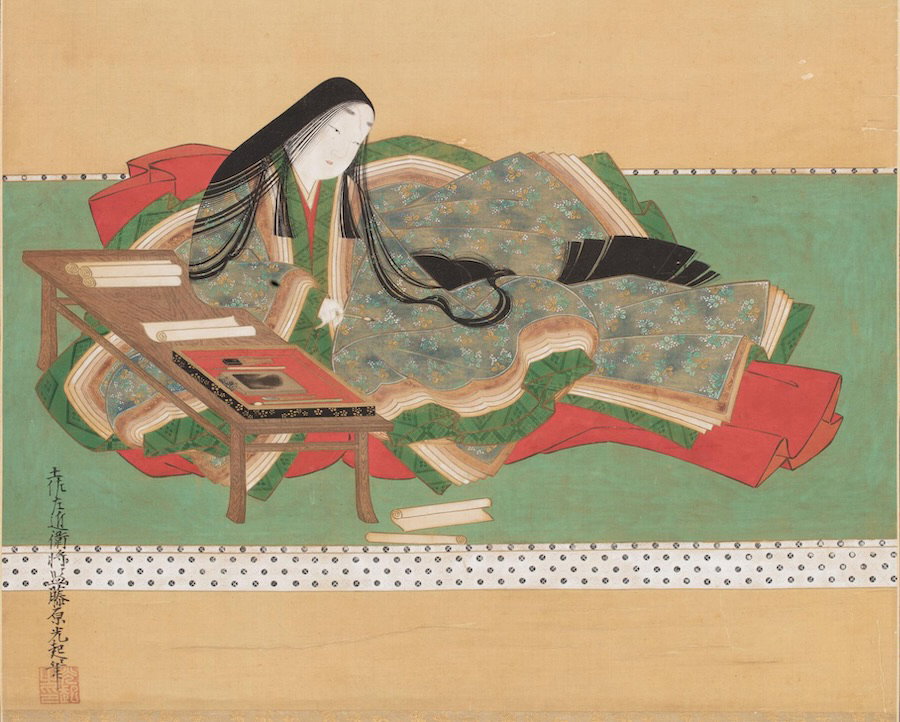 | 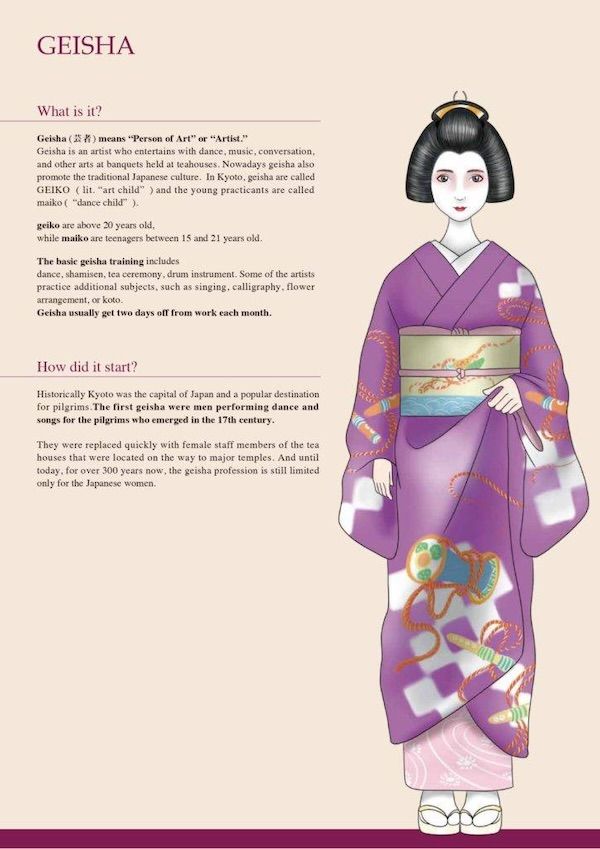 |
Seminar: Japanese Women’s History Topic: Studies in women (and children) in society, law, labor, politics, business, war, literature, and the arts in Japan’s history. The light and the dark of Japan’s history. Registration ID: 21GK006 Seminars on Specific Topics テーマ演習 Monday 5th period (17:10) 月5 Theron Fairchild セロン フェアチャイルド This seminar is scheduled from 17:10 until 18:50, but we will be done with the classroom portion by 18:00 each week. Students can leave after 18:00 and use their own time to complete a short weekly or biweekly reading or video assignment. The seminar uses video and some short reading articles. There are NO EXAMINATIONS in this seminar. Women in Japan have played important roles in Japan for centuries, but they are generally overlooked in the typical elitist and traditional histories of Japan that focus on national power. Women have been emperors, literary masters, inventors of art forms, as well as the economic and political heads of powerful families, reliable educators to both poor and rich families, and key modern reformers, sometimes at the cost of their own lives. The story of Japanese women, and children, shows a side of the country that is often ignored in the “export branding” of Japan as a land of strong samurai, beautiful aesthetics, and cute anime. Do you wish to join this seminar? __ Yes. I will go to administration and sign up (enroll) by myself. __ Yes. But I want Theron to enroll me {CLICK HERE}. | |
Weeks 03-04ASSIGNMENT 01Spread of Writing(30 points) Complete : 提出期限October 8 (10pm) (Thursday) 10月8日 (22:00) (木) (+1) Point submit by 10/5 (月) 22:00 | |
Assignment1. Spread of Writing
| |
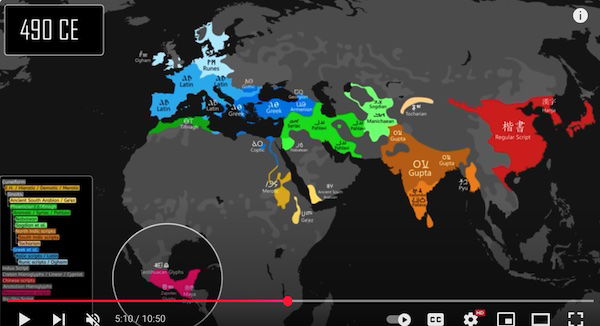
Silk Road history (video 9 min.) Silk Road history (basic video 5 min.) BUDDHISM 仏教 Buddhism - Four Noble Truths .pdf Spread of Buddhism video (6 min.) | |
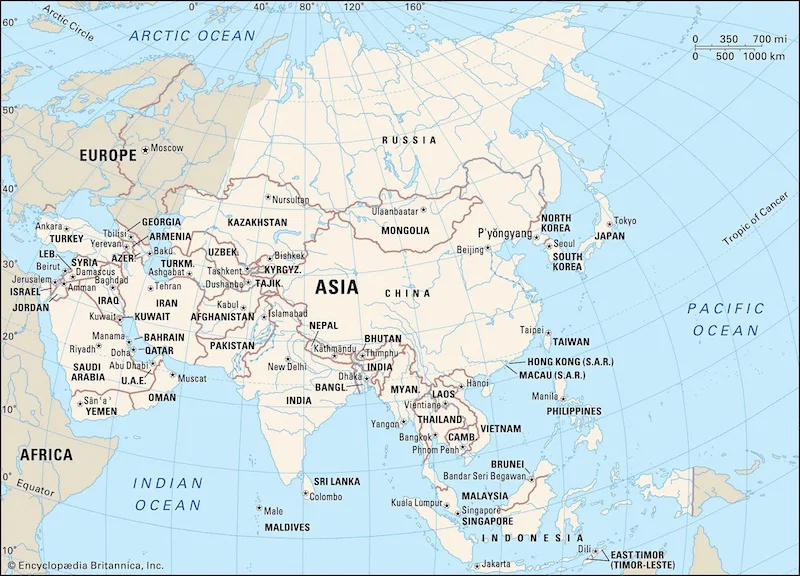
| Topo Map 1 - E. Asia Topo Map 2 - Asia a bit wider Google Earth History of the World video map (does NOT include Indigenous peoples) History of East Asia video map | |

Weeks 03-04ASSIGNMENT 02Reading and WritingComplete : 提出期限October 15 (10pm) (Thursday) 10月15日 (22:00) (木) (+1) Point submit by 10/9 (金) 22:00 | |
| AssignmentRead the two Encyclopedia articles: 1. Han Dynasty (c. 202 BCE ~ 220 CE)2. Three Kingdoms Period of Korea (c. 57 BCE ~ 668 CE)2. Assignment |
_________________________________________________________
FIELD TRIP 01October 24 (Saturday) 09:00~12:30總持寺09:00 MEETING LOCATION: 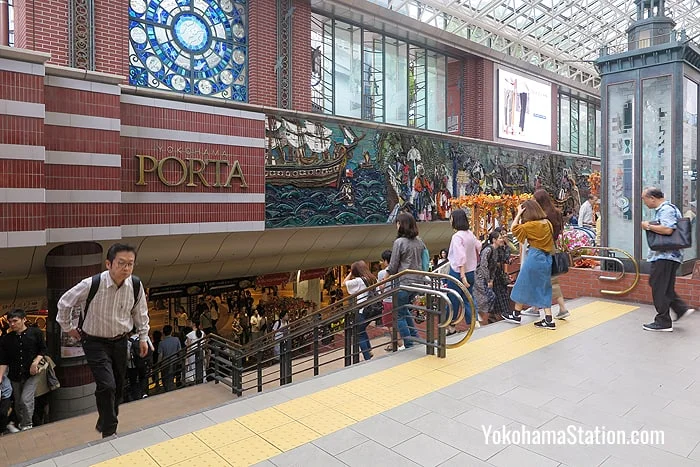 PORTA Escalators in Yokohama Station | ||
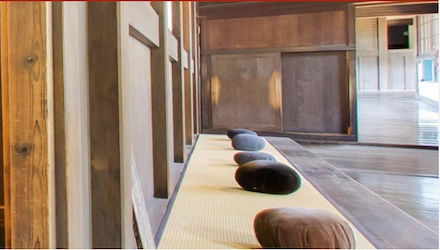 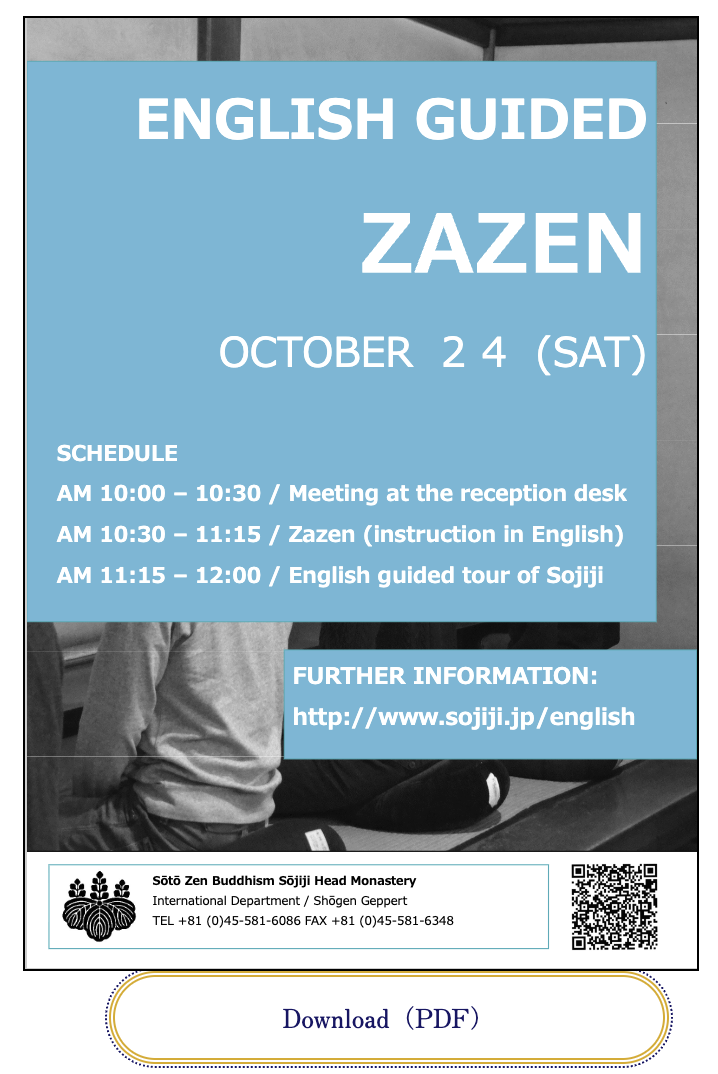 | Sōji-ji Zen Monastery (Wikipedia) 總持寺 (ウィキペディア) Sōji-ji (總持寺) is one of two daihonzan (大本山, "head temples") of the Sōtō school of Zen Buddhism. The other is Eihei-ji temple in Fukui Prefecture. Fodor's calls it "one of the largest and busiest Buddhist institutions in Japan." | |
Japanese Soto Zen Buddhism is the most famous form of Zen in the world, since it was the first form to be exported from Japan to the West. As a result, Soto zen has an international focus. This field trip will include 45 minutes of an English introduction to Zazen, which is zen-style meditation. Then we will take a guided tour of the temple in English. The cost at the temple is ¥500. By train and on foot, the monastery is about 40 minutes from Yokohama Station. --WEAR CLEAN & COMFORTABLE CLOTHES-- October 24 09:00 October 24 (Saturday)English-Guided-Zazen-October-2026.pdf | ||
NOT RELIGIOUS - This trip is about CULTURE. If you are worried, this trip is NOT about religion. It is a tour of the temple and a basic introduction on how to meditate quietly in the Soto zen style. This is a recurring event open to the public. The focus is basic and practical. There is no religious requirement. It's mostly a way to experience a part of Japan's history. There is no easy way to explain zen, so it's best to experience it with your body. There will be a tour of the monastery afterward. Please don't worry about religious things or strict rules. That level of zen is only for advanced learners. We are just a friendly basic group. | ||
FIELD TRIP 02YOKOHAMA HISTORY on foot NOT Required, but can use this trip for class credit. November 2 (Monday) 16:30~18:2016:30 MEETING LOCATION:KU CAMPUS CLASSROOM 6009 | ||
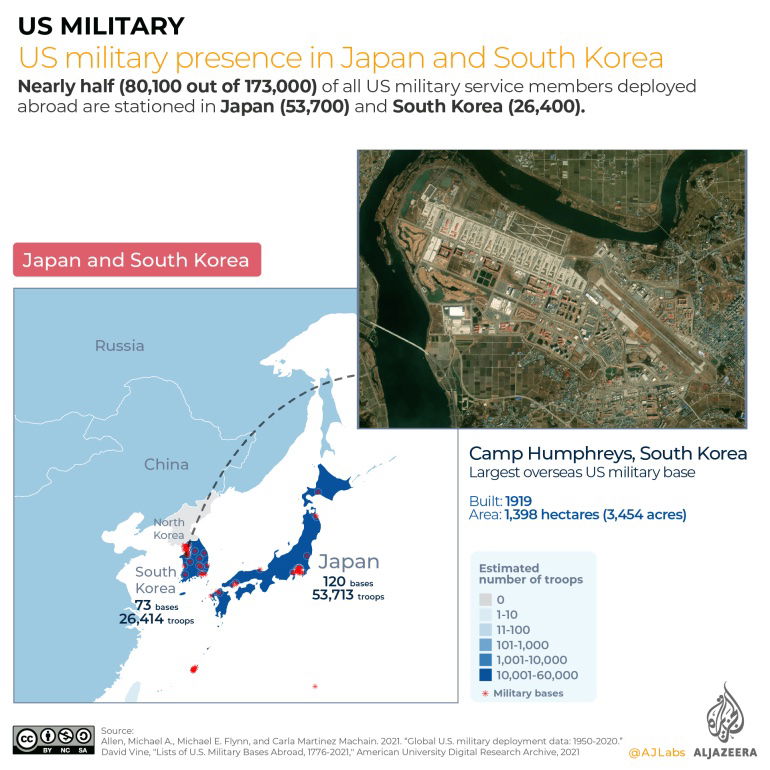
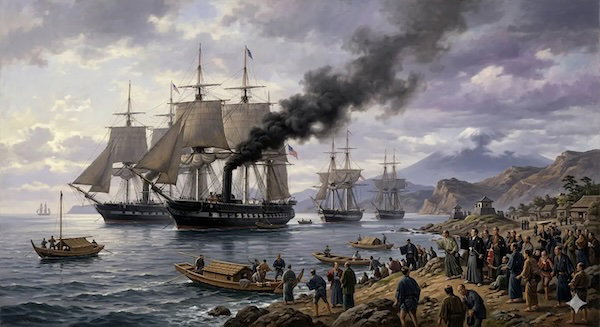 | This is a walking historical tour of old Yokohama. Yokohama was built for international trade in the 1850s and has expanded since. Chinatown emerged during this time, which is where the Chinese merchants, traders, managers, and prostitutes lived. Chinatown evolved into a restaurant district during the 20th century. There has always been an American influence in Yokohama, since the U.S. Black Ships (kurofune) [picture to left] arrived in 1853, to force Japan to open its borders. The U.S. also made Yokohama its HQ during the U.S. occupation of Japan during 1945-1952. (Still today, the largest American naval base in the world, outside of the U.S. itself, is in Yokosuka, which is several kilometers down the coast from Yokohama.) We will walk around some well-known and essential historical sites near the water, from Nihon-odori to Yamashita Park. | |
--WEAR WALKING SHOES -- November 2 16:30 November 2 (Monday) | ||
This tour is not required. But students receive credit for attending. Tokugawa/Edo isolationist policy (sakoku) | ||
FIELD TRIP 03NOT Required, but can use this trip for class credit. November 14 (Saturday)09:00~12:30 & 13:00~15:1509:00PORTA Escalators in Yokohama Station 09:00~15:15鎌倉 | ||
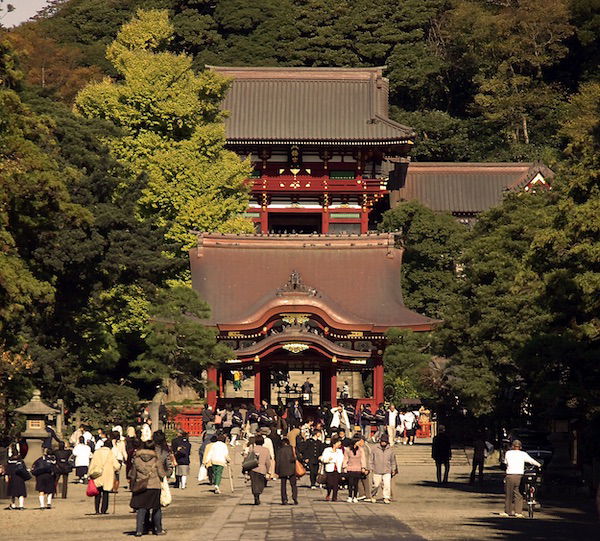 | KAMAKURABring about ¥1000 cash because some spots have a small entrance charge.And you might want to eat some food or buy souvenirs, so have some money for that. | |
November 14 (Saturday)09:00~12:30 & 13:00~15:15This is a historical tour (on foot) around Kamakura, which was the center of power in Japan from 1185 to 1333 CE. Anyone can attend, not just my students. If you only want to stay half a day, you can leave the trip after 12:30. We will return to Kamakura Station at around 12:30. 09:00 we'll meet at Yokohama Station and travel to Kamakura 09:30~12:30 walk around main shrine of Hachimangu and downtown apx. 12:30 return to station area. There is a McDonald's and convenience stores for a quick lunch. 13:00~15:00 we'll take the Enoshima line to visit Hasadera (temple) and finally the Big Buddha. 15:15 we should be back at the local Hasadera station by apx. 15:15 Saturday, November 14 | ||
Students can use this field trip for class credit. | ||
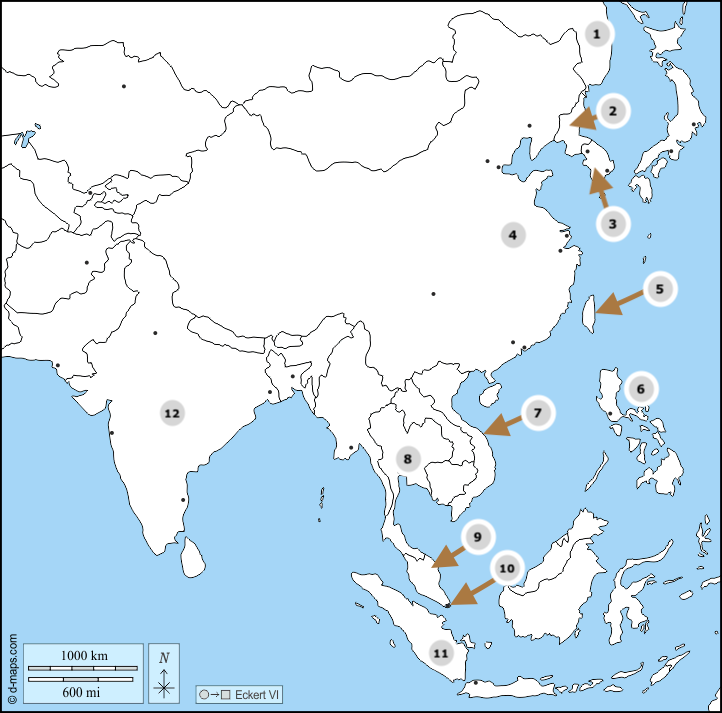
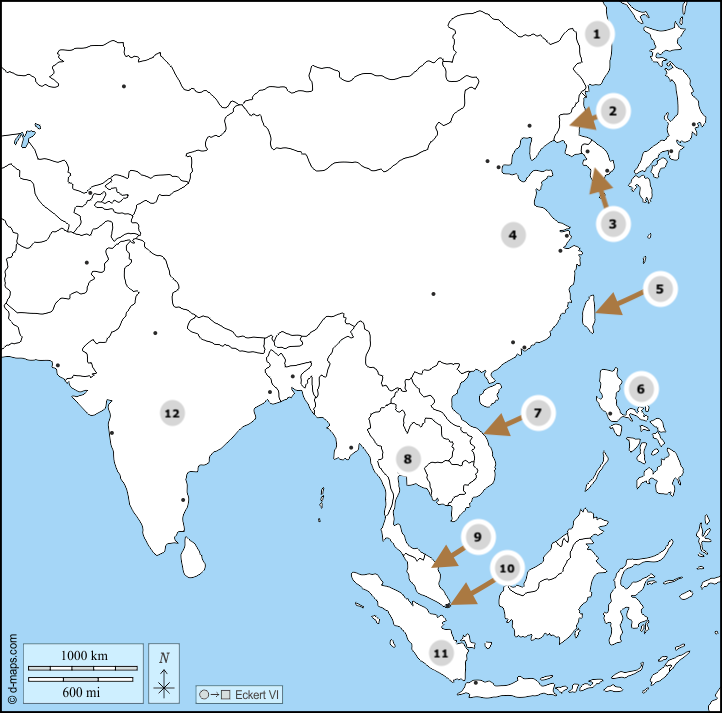
SECTION 1ASIA MAP & COMPANIESREQUIREDComplete : 提出期限October 1 (10pm) (Thursday) 10月1日 (22:00) (木) | |
Asia Map | Asia Map.pdfUse the Map (PDF)1. Asian Map & Companies |
| Practice looking for accurate information in English. | |
Use the Internet to find the information. Useful links: | |

OLDSECTION 2Student InformationREQUIREDComplete : 提出期限October 1 (10pm) (Thursday) 10月1日 (22:00) (木) | ||
| Please provide a working email address. | ||
 | 2. Student InformationPlease provide an email address that you want to use for contact with Theron Fairchild. | |
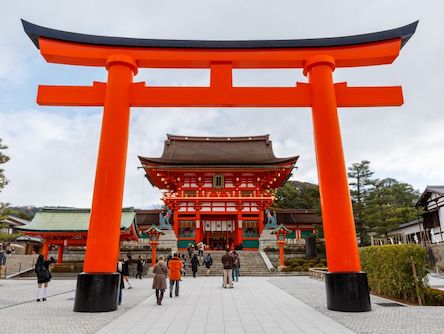
Two Main Religions in Japanese history | |
Shinto 神道 | Buddhism 仏教 |
| -native to Japan -started in Japan's Yayoi period (c. 300 BCE ~ 250 CE) -Shinto evolved from ancient nature worship and magic. 神道は古代の自然崇拝と呪術から発展した。 | -from northern India -started c. 500 BCE -Buddhism evolved from early Hinduism in India. 仏教はインドにおける初期ヒンドゥー教から発展した。 |
| Shinto is a Japanese religion | Buddhism entered Japan c. 500 CE from China and Korea. |
| kami 神 (deities/local gods) | Buddha (仏 Enlightened Being) |
| shamanism シャーマニズム animism/spirits 精霊 | Four Noble Truths & 8-fold Path 四つの聖なる真理 |
| shrines (神社 jinja) | temples (寺 tera) |
 | 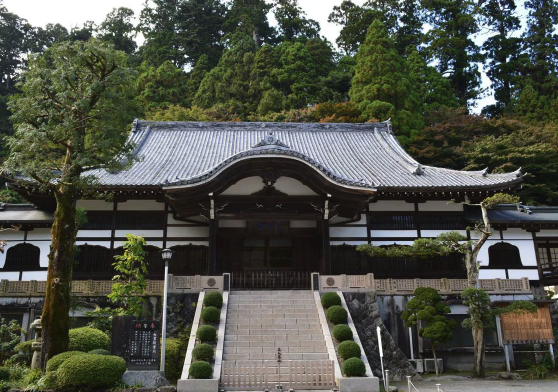 |
| Shinto priest 神主 only men are priests today | Buddhist monk 仏教僧 only men are monks in most countries |
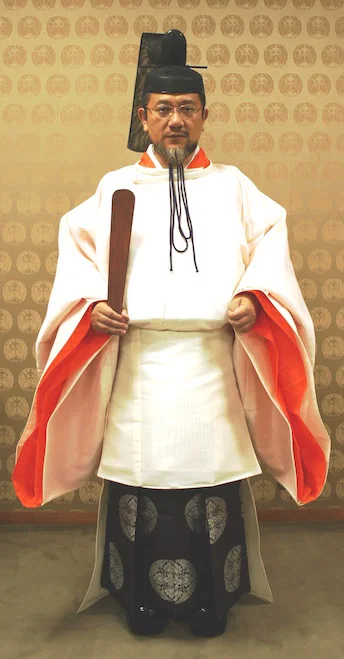 | 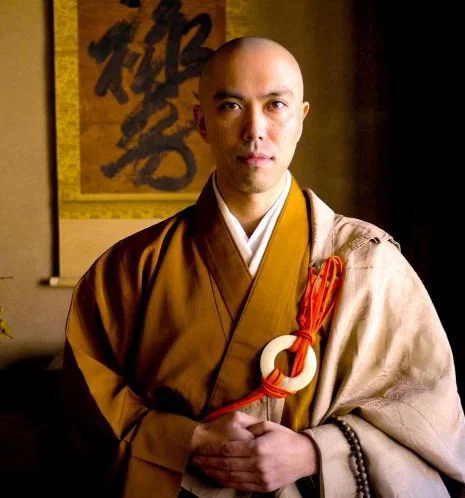 |
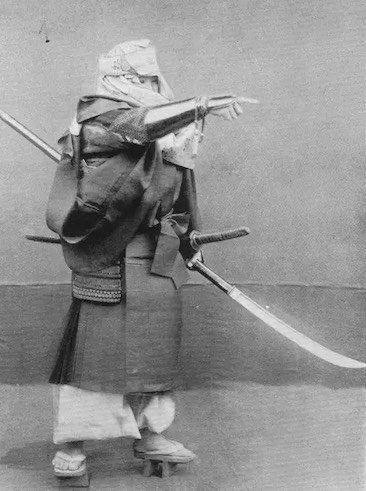
| Ancient Shinto - women held power, including Queen Himiko, perhaps Japan's first true ruler, who was a powerful Shamaness (priestess) 巫女. Women played an important role in shaping early Shinto. | Most Buddhism in Japan has tried to be peaceful. However, it also has a violent side. Japanese Zen Buddhism became the most popular form with the samurai warrior class. The samurai were especially violent between years 1150 and 1650. Some sects of Buddhism also trained warrior monks (special soldiers) during the civil war period and even during WWII. |
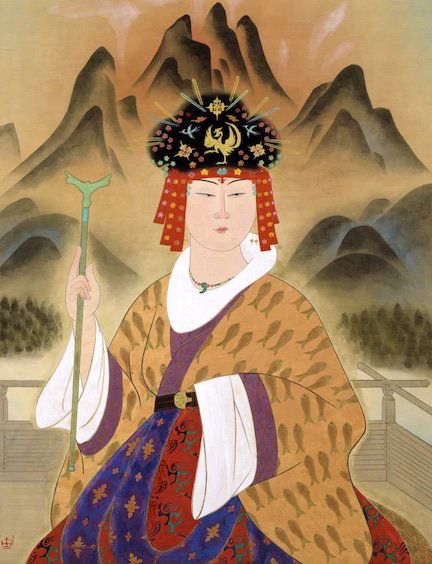 |  |
| The Japanese language has little context and no specific grammar for female "priests/monks/shamans/sorcerers". Politics and older history texts have used this gendar-neutral language to systematically write women out of Japan's ancient history, to promote patriarchy (male focus) and the propaganda that power in Japan has always been with men. In other words, the Japanese language has been a friend to men and an enemy to women. 日本語には、女性の僧侶、僧侶、シャーマン、呪術師を表す特定の言葉が存在しない。政治や古い歴史書は、この言葉を利用して日本の古代史から女性を組織的に抹消し、家父長制と、日本における権力は常に男性にあったというプロパガンダを広めてきた。 | |
| Spread of Buddhism map | |
Class Topic:Evolution of Religion in AsiaConfucianism, Buddhism, Arrival of Europeans & Christianity If you have never seen this film, I highly recommend "Silence," by Italian-American filmmaker Martin Scorsese. It takes place around the year 1635, during the Tokugawa government's violent persecution of Japanese Christians, mostly peasants. The film is based on the 1966 novel 沈黙 (Silence) by Shusaku Endo. Scorsese spent about 20 years planning this film, which is visually and historically accurate for the period. It stars several excellent Japanese actors, including Tadanobu Asano, Shinya Tsukamoto, and Yoshi Oida. | |
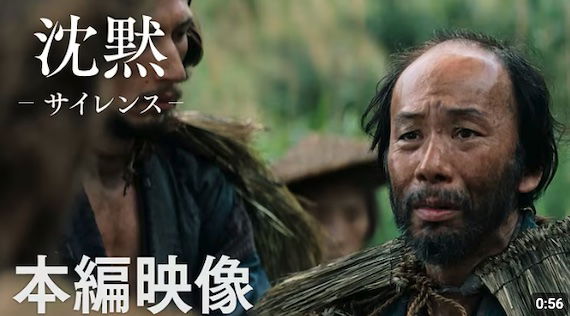 | Highly recommended film:Silence (2016) Film Clip: Crucifixion by the SeaFilm Clip: Priest Meets Edo InquisitorFilm Clip: Rodrigues SubmitsFilm Clip: the Beauty of Silence |
| In Modern Era (Control over religions continued until 1945). The idea that "the Japanese" are just one people with one religion/ideology, with just one history and one plan for all of Japan is modern propaganda. 「日本人」は一つの民族であり、一つの宗教・イデオロギーを持ち、一つの歴史と日本全体に対する一つの計画を持っているという考えは、現代のプロパガンダである。 Modern Imperial Control over Christian Socialism.pdf Shinto and Buddhism played no role in the 17th century destruction of Christianity. Christianity was destroyed by the Edo/Tokugawa Shogunate (government). | |
2026 01_2026年度 学年暦【学部及び大学院】.pdf
| GENETIC ANCESTRY of PRESENT-DAY JAPANESE Tripartite admixture of modern Japanese population | |
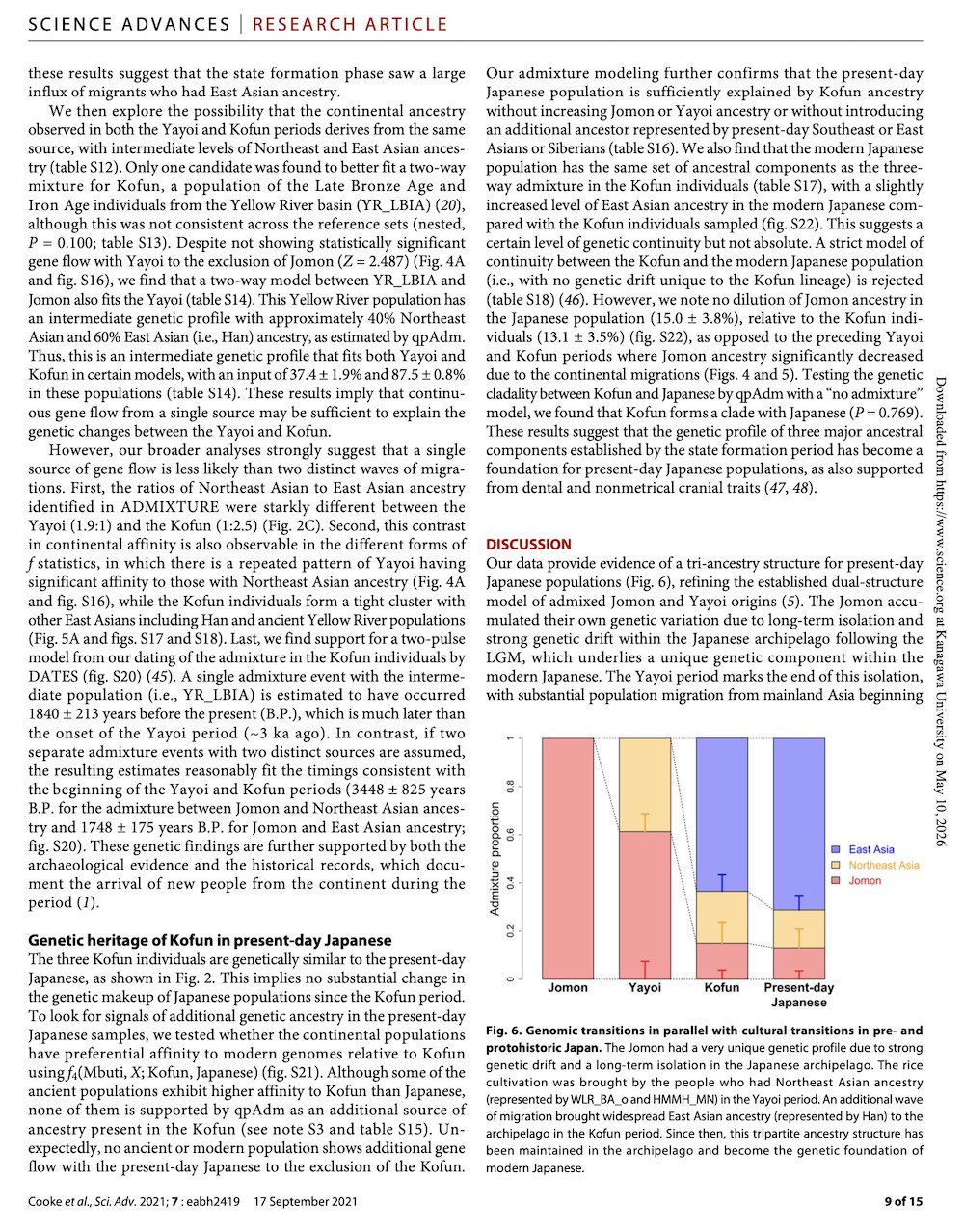 | Tripartite admixture.pdf Kofun period 古墳時代 (c. 250 CE to 600 CE) Yayoi period 弥生時代 (c. 300 BCE to 300 CE) Jomon period 縄文 時代 (c.14,000 to 300 BCE) |
| GENETAIC ADMIXTURE in CHINA Coastal populations in China - Genetic Ancestry (admixture) https://www.nature.com/articles/s41467-025-56555-w | |
 |  |  |
 |  |  |
 |  |  |
 |  |  |

Place to eat and drinkis popular with International Students |
