History - Fall 2026 Week 2
HISTORY of Japanese Business: Monday 4th Period (月)4限
MONDAY History (Fall 2026)
下記の方法に従うこと
READ THE DIRECTIONS
WEEK 2HistoryOctober 5 [月] ~ October 11 [日] |
2026 Fall SemesterJapanese History (Monday) 4th period15:20~17:00 [14 weeks] | ||
| Class Week | Day | Location |
| 1 | 9/28 | 6009 教室 |
| 2 | 10/5 | 6009 教室 |
| 3 | 10/12 | 6009 教室 |
| 4 | 10/19 | website only (no classroom) |
| TRIP | 10/24 (Sat.) | SOJI-JI Monastery (optional) 09:00~12:30 |
| 5 | 10/26 | 6009 教室 |
| 6 | 11/2 | 6009 教室 |
| walking | 11/2 (MON.) 16:30 | Yokohama history on foot (optional) |
| 7 | 11/9 | 6009 教室 |
| TRIP | 11/14 (Sat.) | Kamakura tour [on foot] (optional) 09:00~12:00 & 13:00~15:00 |
| 8 | 11/16 | 6009 教室 |
| 9 | 11/23 | 6009 教室 |
| 10 | 11/30 | website only (no classroom) |
| 11 | 12/7 | 6009 教室 |
| 12 | 12/14 | 6009 教室 |
| 13 | 12/21 | 6009 教室 |
| holidays | 12/28, 1/4, 1/11 | no KU classes |
| 14 | 2026/1/18 | website only (no classroom) |
ATTENTION This class is open to ALL INTERNATIONAL STUDENTS. There are still many openings in this seminar. Please join if you have the time. | |
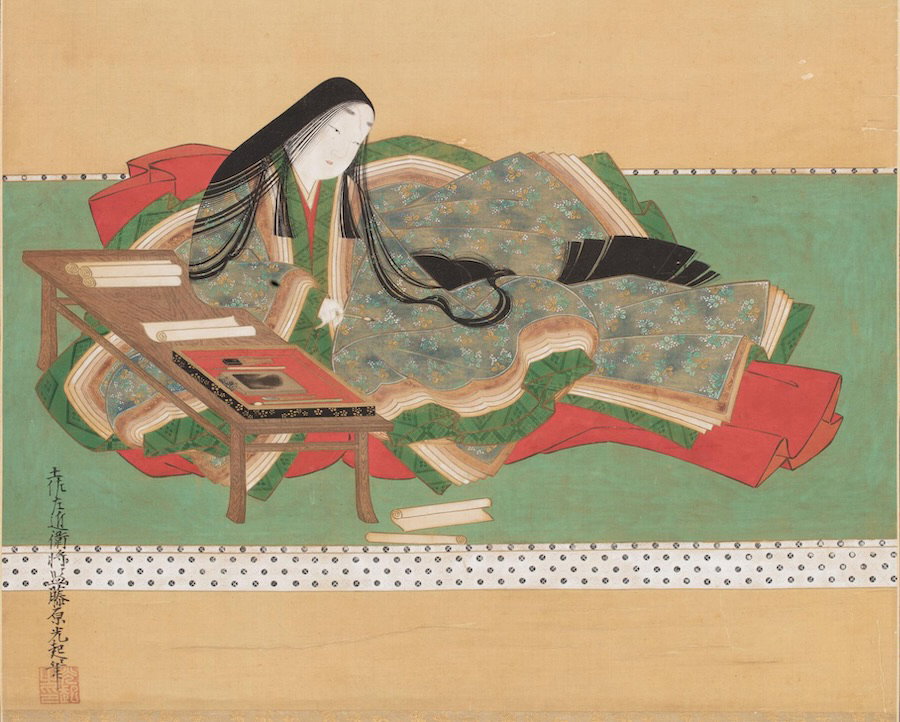 | 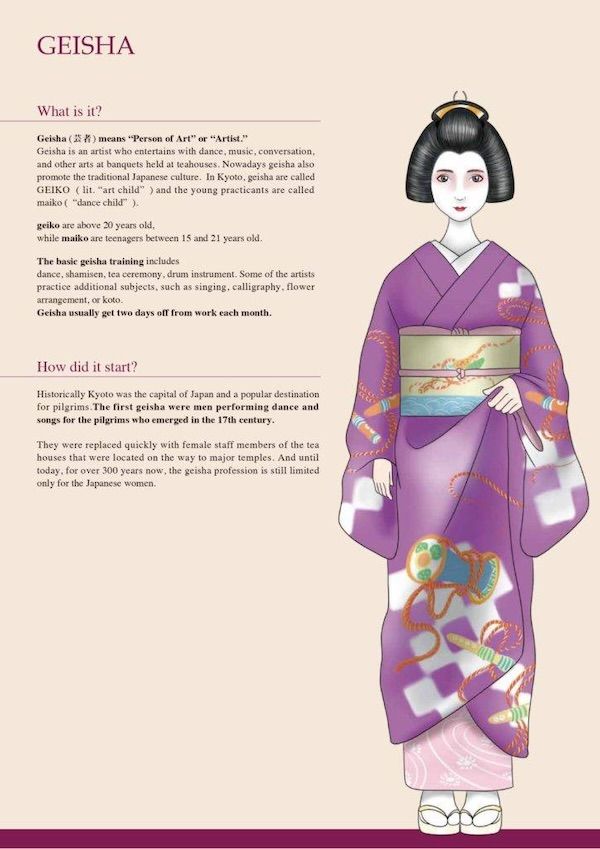 |
Seminar: Japanese Women’s History Topic: Studies in women (and children) in society, law, labor, politics, business, war, literature, and the arts in Japan’s history. The light and the dark of Japan’s history. Registration ID: 21GK006 Seminars on Specific Topics テーマ演習 Monday 5th period (17:10) 月5 Theron Fairchild セロン フェアチャイルド This seminar is scheduled from 17:10 until 18:50, but we will be done with the classroom portion by 18:00 each week. Students can leave after 18:00 and use their own time to complete a short weekly or biweekly reading or video assignment. The seminar uses video and some short reading articles. There are NO EXAMINATIONS in this seminar. Women in Japan have played important roles in Japan for centuries, but they are generally overlooked in the typical elitist and traditional histories of Japan that focus on national power. Women have been emperors, literary masters, inventors of art forms, as well as the economic and political heads of powerful families, reliable educators to both poor and rich families, and key modern reformers, sometimes at the cost of their own lives. The story of Japanese women, and children, shows a side of the country that is often ignored in the “export branding” of Japan as a land of strong samurai, beautiful aesthetics, and cute anime. Do you wish to join this seminar? __ Yes. I will go to administration and sign up (enroll) by myself. __ Yes. But I want Theron to enroll me {CLICK HERE}. | |
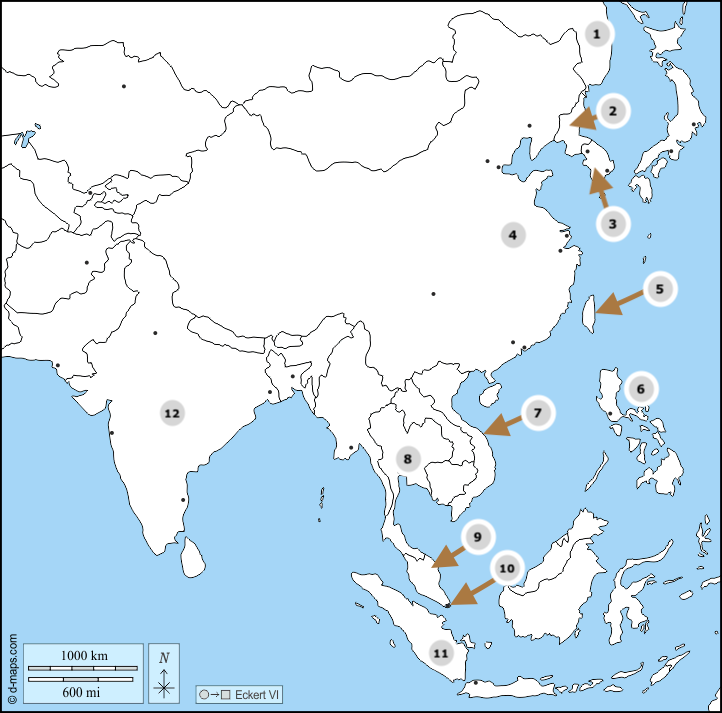
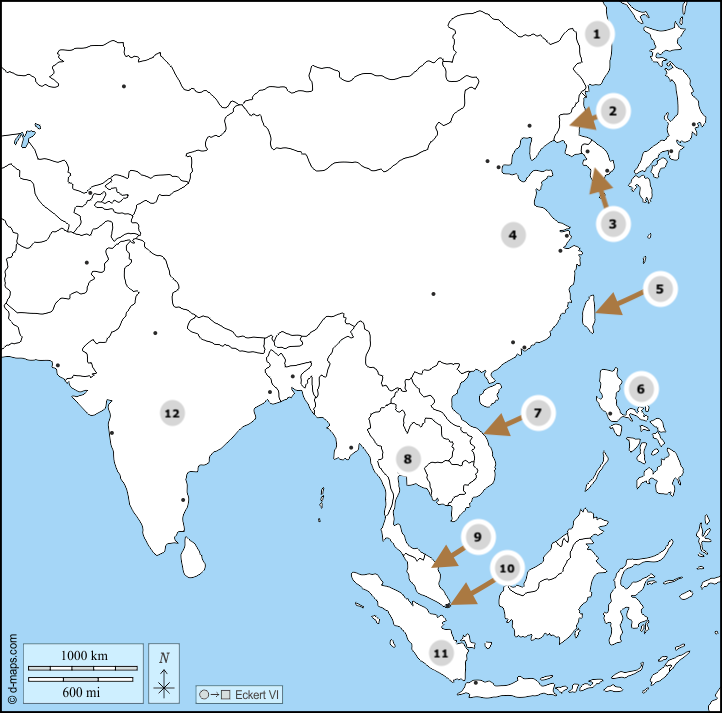
SECTION 1ASIA MAP & COMPANIESREQUIREDComplete : 提出期限October 11 (10pm) (Sunday) 10月11日 (22:00) (日) | |
Asia Map
| Asia Map.pdfUse the Map (PDF)1. Asian Map & Companies |
| Practice looking for accurate information in English. | |
Use the Internet to find the information. Useful links: | |

SECTION 2Student InformationREQUIREDComplete : 提出期限October 11 (10pm) (Sunday) 10月11日 (22:00) (日) | ||
| Please provide a working email address. | ||
 | 2. Student InformationPlease provide an email address that you want to use for contact with Theron Fairchild. | |
SECTION 3Assignment Imitation & InnovationComplete : 提出期限October 11 (10 pm) (Sunday)10月11日 (22:00) (日) | |
| 2. Imitation-Innovation Assignment |

FIELD TRIP 01NOT Required, but can use this trip for class credit. October 24 (Saturday) 09:00~12:30總持寺09:00 MEETING LOCATION: 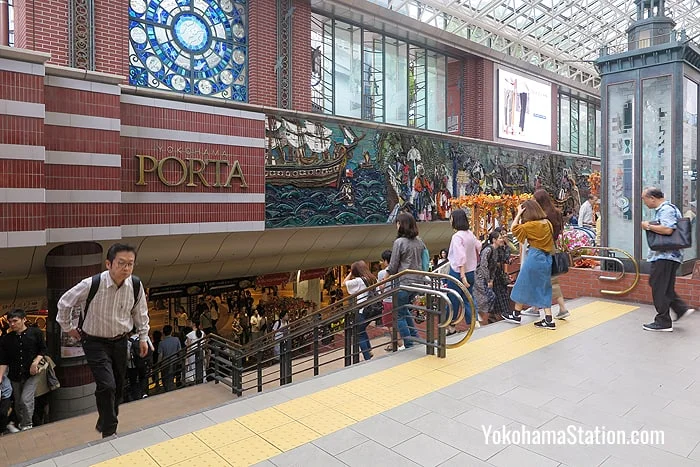 PORTA Escalators in Yokohama Station | ||
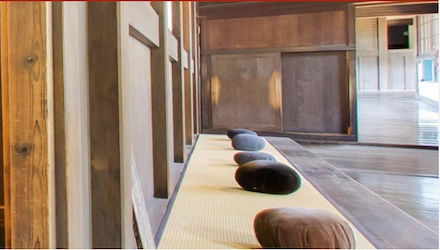 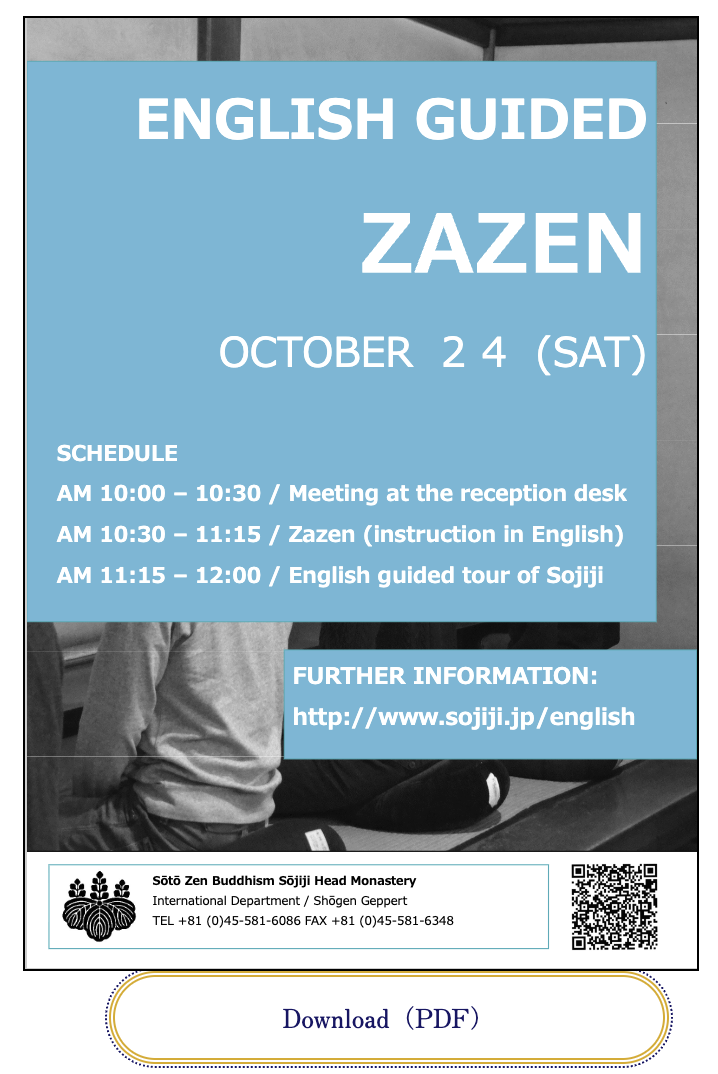 | Sōji-ji Zen Monastery (Wikipedia) 總持寺 (ウィキペディア) Sōji-ji (總持寺) is one of two daihonzan (大本山, "head temples") of the Sōtō school of Zen Buddhism. The other is Eihei-ji temple in Fukui Prefecture. Fodor's calls it "one of the largest and busiest Buddhist institutions in Japan." | |
Japanese Soto Zen Buddhism is the most famous form of Zen in the world, since it was the first form to be exported from Japan to the West. As a result, Soto zen has an international focus. This field trip will include 45 minutes of an English introduction to Zazen, which is zen-style meditation. Then we will take a guided tour of the temple in English. The cost at the temple is ¥500. By train and on foot, the monastery is about 40 minutes from Yokohama Station. --WEAR CLEAN & COMFORTABLE CLOTHES-- October 24 09:00 October 24 (Saturday)English-Guided-Zazen-October-2026.pdf | ||
NOT RELIGIOUS - This trip is about CULTURE. If you are worried, this trip is NOT about religion. It is a tour of the temple and a basic introduction on how to meditate quietly in the Soto zen style. This is a recurring event open to the public. The focus is basic and practical. There is no religious requirement. It's mostly a way to experience a part of Japan's history. There is no easy way to explain zen, so it's best to experience it with your body. There will be a tour of the monastery afterward. Please don't worry about religious things or strict rules. That level of zen is only for advanced learners. We are just a friendly basic group. | ||
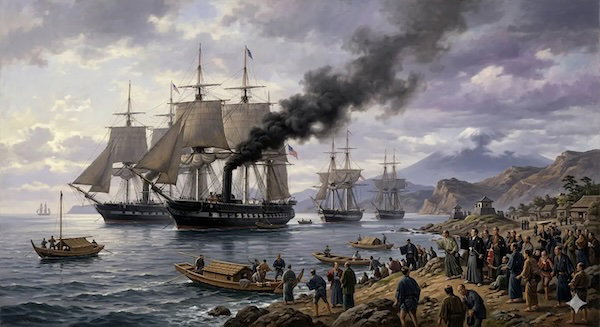
FIELD TRIP 02YOKOHAMA HISTORY on foot NOT Required, but can use this trip for class credit. November 2 (Monday) 16:30~18:2016:30 MEETING LOCATION:KU CAMPUS CLASSROOM 6009 | |||
 |
| ||
--WEAR WALKING SHOES -- November 2 16:30 November 2 (Monday) | |||
This tour is not required. But students receive credit for attending. Tokugawa/Edo isolationist policy (sakoku) | |||
FIELD TRIP 03NOT Required, but can use this trip for class credit. November 14 (Saturday)09:00~12:30 & 13:00~15:1509:00PORTA Escalators in Yokohama Station 09:00~15:15鎌倉 | ||
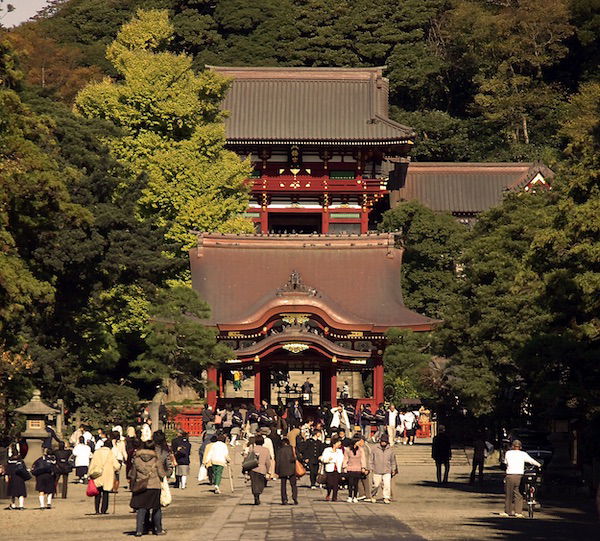 | KAMAKURABring about ¥1000 cash because some spots have a small entrance charge.And you might want to eat some food or buy souvenirs, so have some money for that. | |
November 14 (Saturday)09:00~12:30 & 13:00~15:15This is a short historical tour (on foot) around Kamakura, which was the center of power in Japan from 1185 to 1333 CE. Anyone can attend, not just my students. If you only want to stay half a day, you can leave the trip after 12:30. We will return to Kamakura Station at around 12:30. 09:00 we'll meet at Yokohama Station and travel to Kamakura 09:30~12:30 walk around main shrine of Hachimangu and downtown apx. 12:30 return to station area. There is a McDonald's and convenience stores for a quick lunch. 13:00~15:00 we'll take the Enoshima line to visit Hasadera (temple) and finally the Big Buddha. 15:15 we should be back at the local Hasadera station by apx. 15:15 Saturday, November 14 | ||
Students can use this field trip for class credit. | ||
Two Main Religions in Japanese history | |
Shinto 神道 | Buddhism 仏教 |
| -native to Japan -started in Japan's Yayoi period (c. 300 BCE ~ 250 CE) -Shinto evolved from ancient nature worship and magic. 神道は古代の自然崇拝と呪術から発展した。 | -from northern India -started c. 500 BCE -Buddhism evolved from early Hinduism in India. 仏教はインドにおける初期ヒンドゥー教から発展した。 |
| Shinto is a Japanese religion | Buddhism entered Japan c. 500 CE from China and Korea. |
| kami 神 (deities/local gods) | Buddha (仏 Enlightened Being) |
| shamanism シャーマニズム animism/spirits 精霊 | Four Noble Truths & 8-fold Path 四つの聖なる真理 |
| shrines (神社 jinja) | temples (寺 tera) |
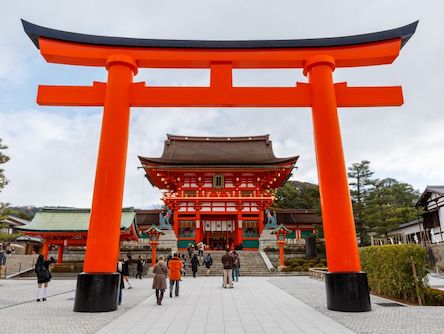 | 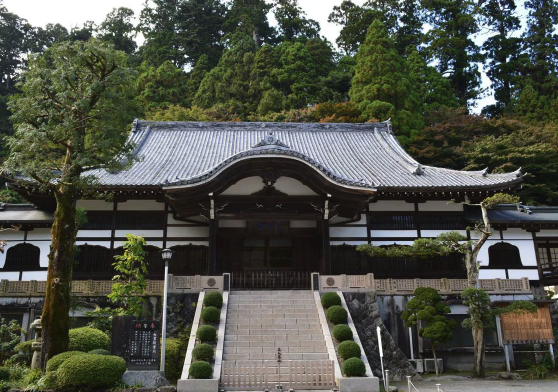 |
| Shinto priest 神主 only men are priests today | Buddhist monk 仏教僧 only men are monks in most countries |
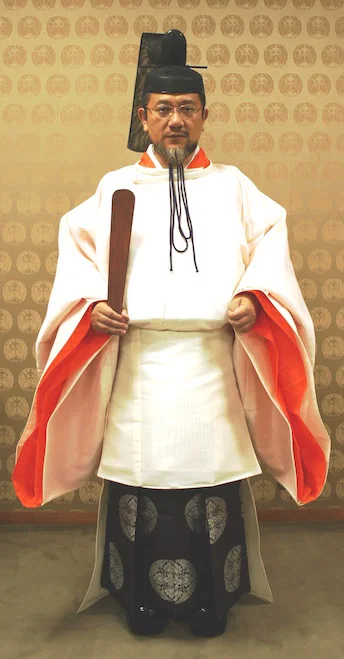 | 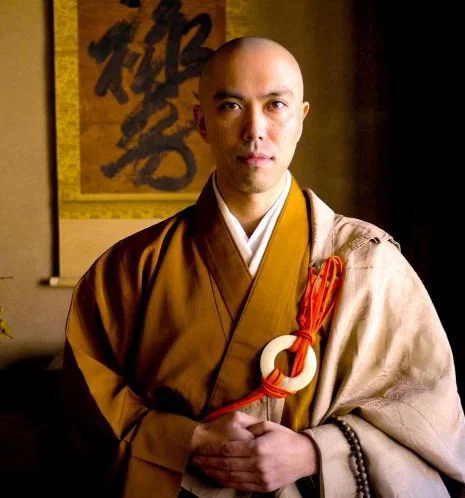 |
| Ancient Shinto - women held power, including Queen Himiko, perhaps Japan's first true ruler, who was a powerful Shamaness (priestess) 巫女. Women played an important role in shaping early Shinto. | Most Buddhism in Japan has tried to be peaceful. However, it also has a violent side. In ancient Japan, some Buddhist sects attacked other temples and even burned them down. Later, Japanese Zen Buddhism became the most popular form with the samurai warrior class. The samurai were especially violent between years 1150 and 1650. Some sects of Buddhism also trained warrior monks (special soldiers) during the civil war period 戦国時代 and even during WWII. |
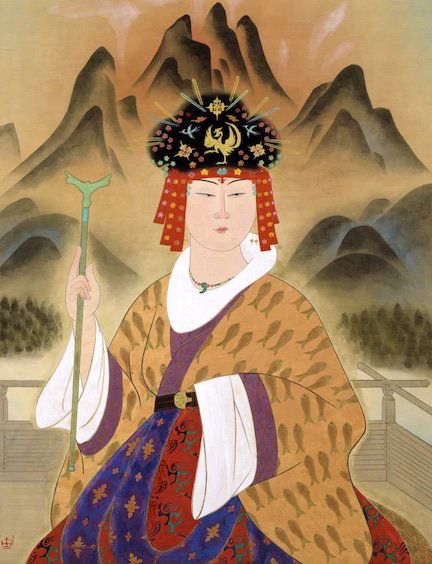 | 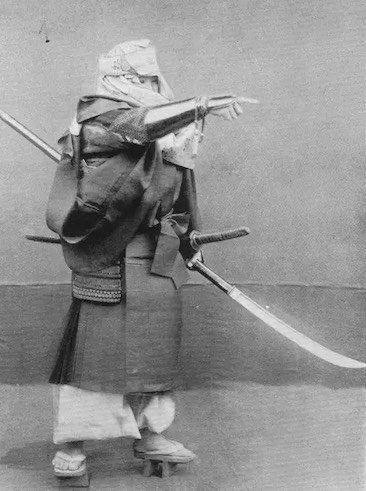 |
| Japanese language has no specific language for female priests/monks/shamans/sorcerers. Politics and older history texts have used the language to systematically write women out of Japan's ancient history, to promote patriarchy and the propaganda that power in Japan has always been with men. 日本語には、女性の僧侶、僧侶、シャーマン、呪術師を表す特定の言葉が存在しない。政治や古い歴史書は、この言葉を利用して日本の古代史から女性を組織的に抹消し、家父長制と、日本における権力は常に男性にあったというプロパガンダを広めてきた。 | |
| Spread of Buddhism map | |
Maps
Trade routes c. 1200 https://www.worldhistory.org/image/15923/map-of-the-trade-networks-in-the-middle-ages-c-120/
September 29 Class Topic:Evolution of Religion in AsiaConfucianism, Buddhism, Arrival of Europeans & Christianity If you have never seen this film, I highly recommend "Silence," by Italian-American filmmaker Martin Scorsese. It takes place around the year 1635, during the Tokugawa government's violent persecution of Japanese Christians, who are mostly peasants. The film is based on the 1966 novel 沈黙 (Silence) by Shusaku Endo. Scorsese spent about 20 years planning this film, which is visually and historically accurate for the period. It features several excellent Japanese actors, including Tadanobu Asano, Shinya Tsukamoto, and Yoshi Oida. | |
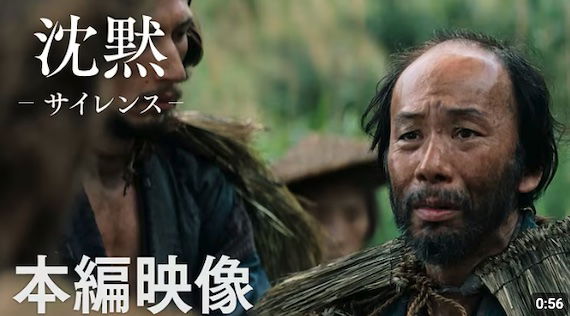 | Highly recommended film:Silence (2016) Film TrailerFilm Clip: Long ClipsFilm Clip: Crucifixion by the SeaFilm Clip: Priest Meets Edo InquisitorFilm Clip: Priests Talk (Why did they die?) |
LINKS World History Encyclopedia (WHE) https://www.worldhistory.org/Taoism/ Maps Trade routes c. 1200 https://www.worldhistory.org/image/15923/map-of-the-trade-networks-in-the-middle-ages-c-120/ | |
Godzilla | |
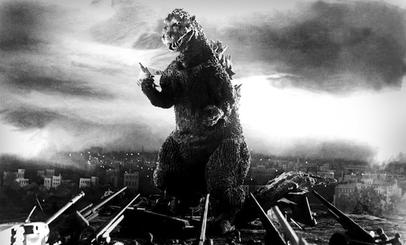 | Godzilla (Gojira) (3:33) |
| Toho Studios (2:10) (LOUD & Italian) | |
| Japanese film industry stats (1955-2023) | |
Samurai Films | |
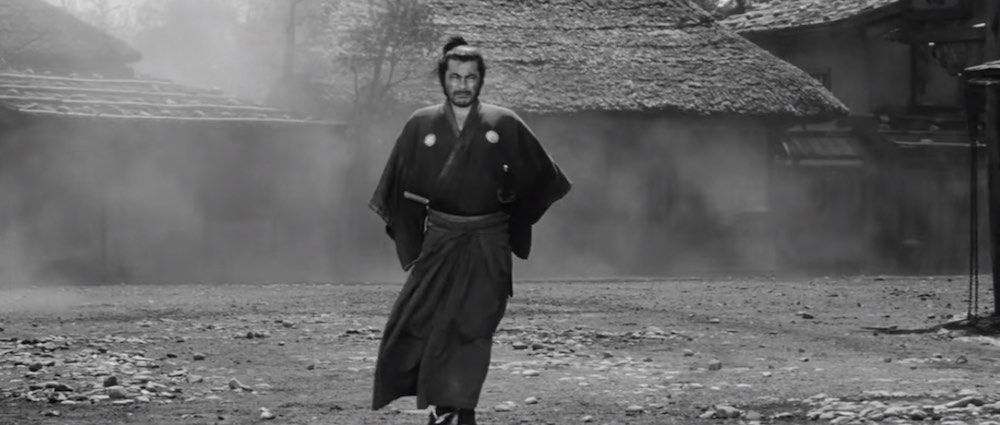 | Yojimbo (2:55) |
| Seven Samurai/Magnificent Seven (1:00) | |
| Mifune (2:08) | |
| Unforgiven (2013) (2:38) Unforgiven (1992) | |
Kurosawa & Star Wars | |
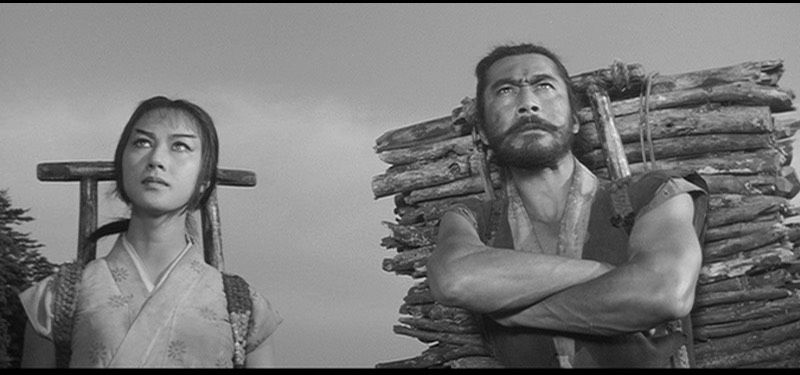 | Hidden Fortress/Star Wars (2:41) |
| Kurosawa & Star Wars (7:51) | |
Anime | |
 | Anime History (1960-2020) (video) |
| Totoro (video) | |
| Spirited Away (Chihiro) [Disney/English] | |
| Miyazaki (video) | |
| Anime Industry Report 2024.pdf Other anime industry reports (link) | |
| Anime labor: the Dark Side of Anime (link) | |
Dark Side Anime - karoshi article.pdfFrom the linked article: "But anime’s outward success conceals a disturbing underlying economic reality: Many of the animators behind the onscreen magic are broke and face working conditions that can lead to burnout and even suicide. The tension between a ruthless industry structure and anime’s artistic idealism forces animators to suffer exploitation for the sake of art, with no solution in sight." | |
Akira & GhostInfluential anime SF in the West | |
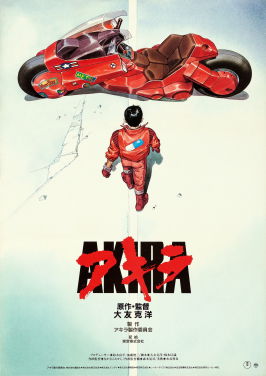 | Akira (1988) (1:52) Akira (Japanese) |
| 攻殻機動隊 Kōkakukidōtai Ghost in the Shell (1995) (3:30) (Montage) Ghost in the Shell (1995)(Spider Tank) [Japanese] | |
| The Matrix & Ghost-Shell compared (2:34) (LOUD) | |
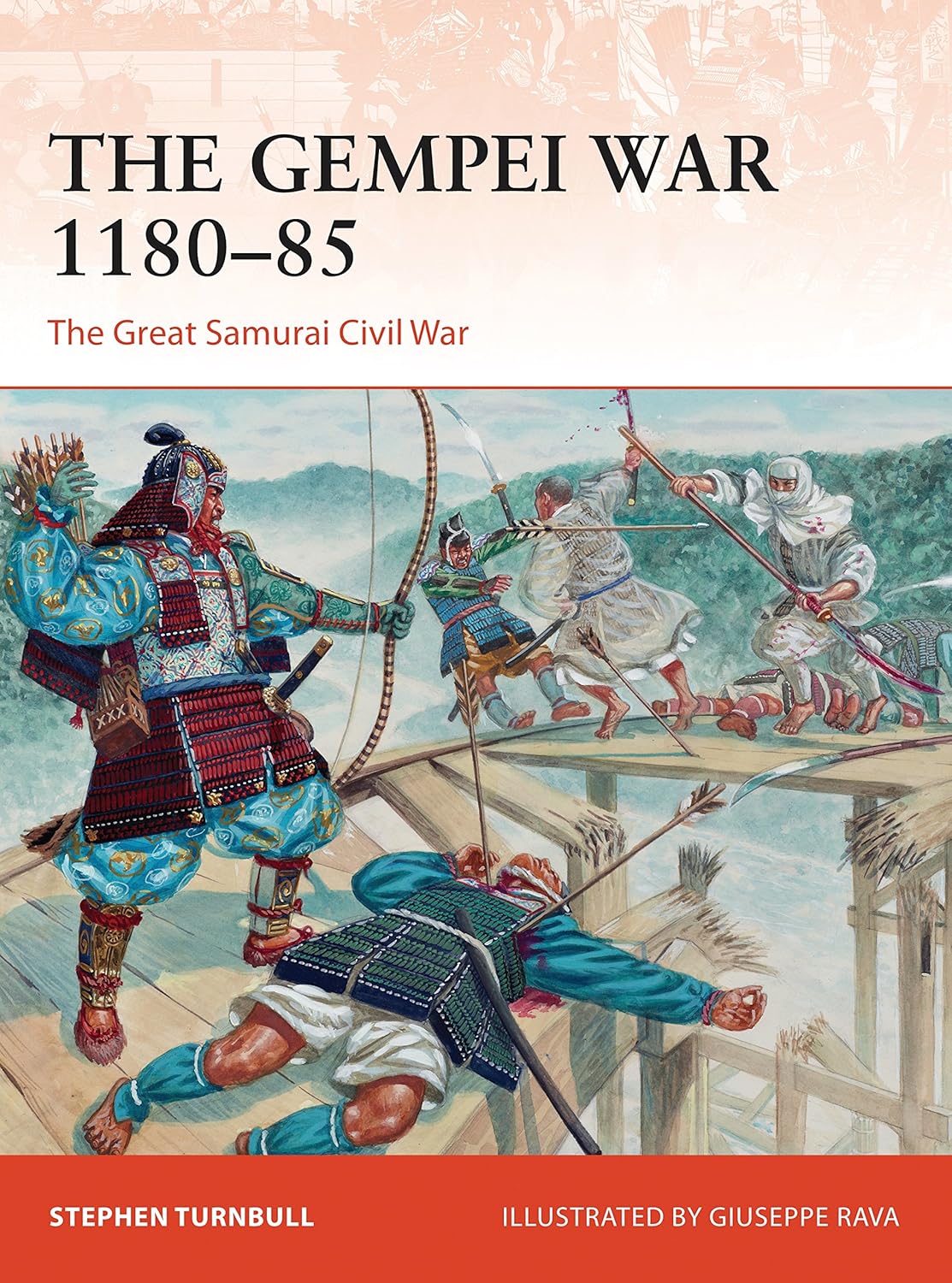 | Internationally renowned samurai expert Dr Stephen Turnbull delves into a pivotal era of Japanese history in this highly illustrated account of The Gempei War, a conflict that defined the age and the ethos of the samurai. Never before had there been a large-scale clash between two rival samurai families, the Taira and the Minamoto, and never again would the result of a war in Japan be quite so dramatic. Fought to gain control over the emperor it would end with imperial power being totally eclipsed in favour of the military might of the samurai class and the establishment of the position of Shogun – Japan's military dictator. Turnbull examines the events of the five-year long conflict, revealing the changes that the war inflicted on Japanese culture and the establishment of many of the traditions of the samurai. |
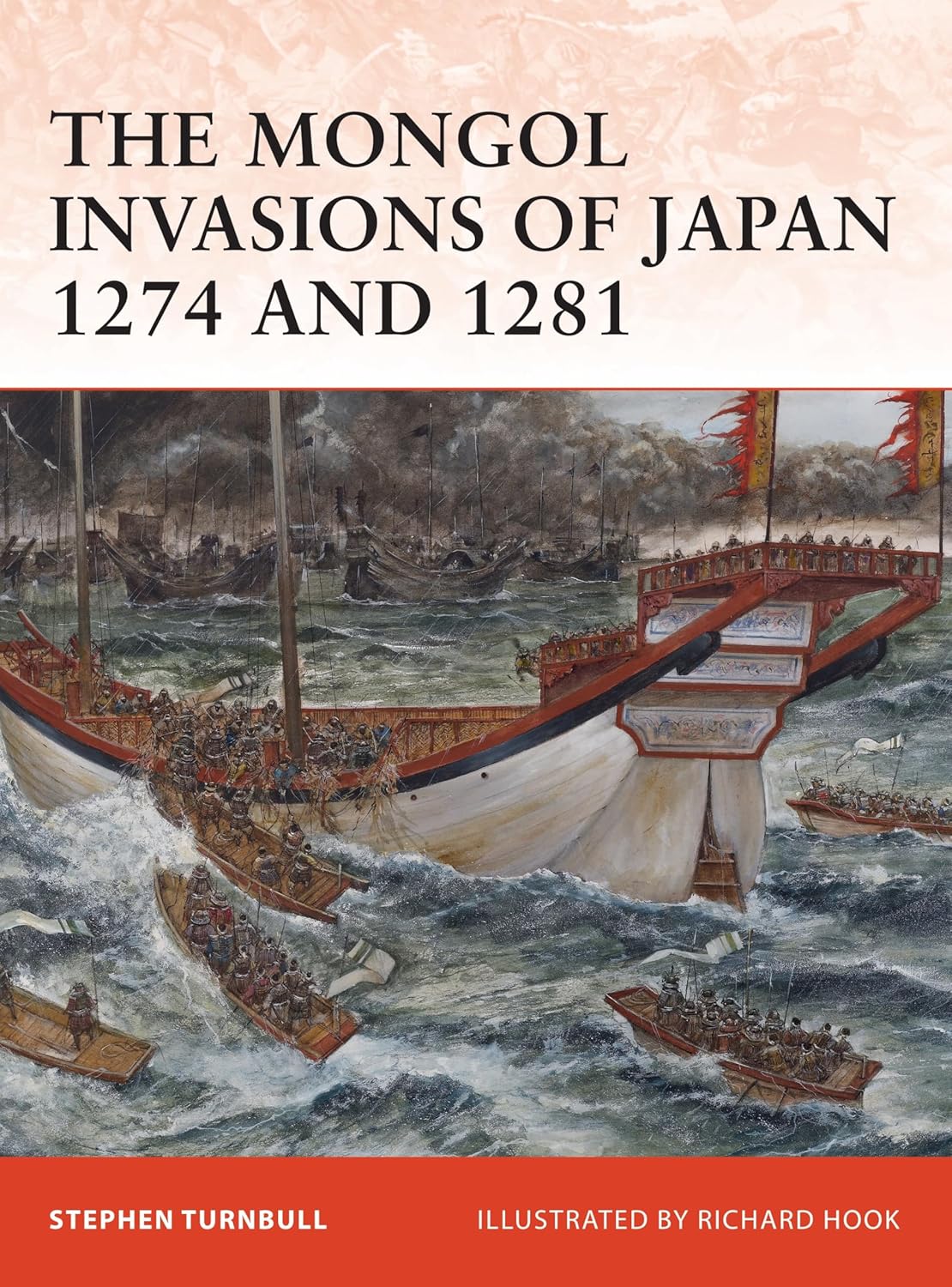 | An illustrated account of one of the most important campaigns in the history of Japan and the origin of the kami kaze - a key part of Japanese national identity. From his seat in Xanadu, the great Mongol Emperor of China, Kubla Khan, had long plotted an invasion of Japan. However, it was only with the acquisition of Korea, that the Khan gained the maritime resources necessary for such a major amphibious operation. |
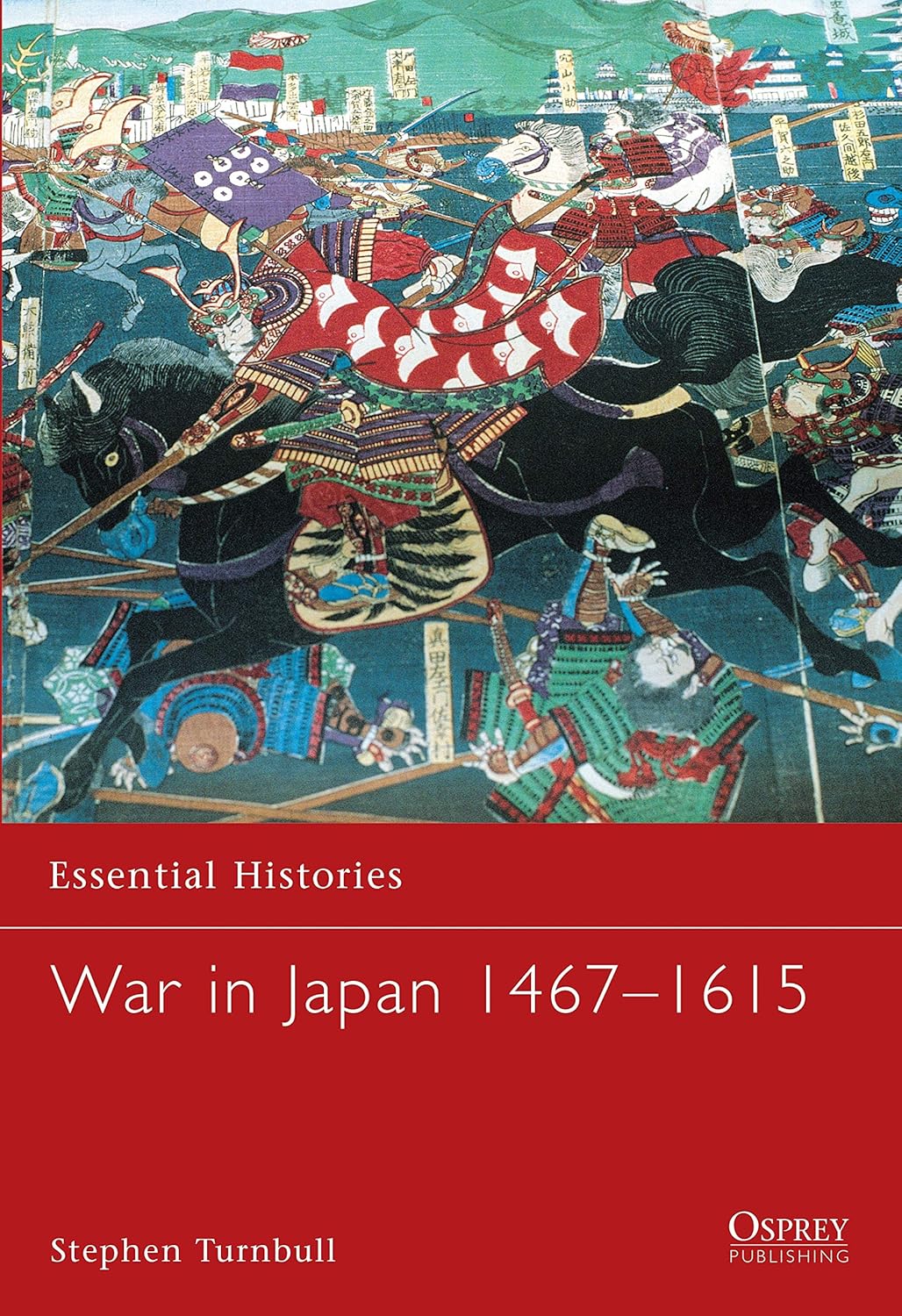 | In 1467 the Onin War ushered in a period of unrivalled conflict and rivalry in Japan that came to be called the Age of Warring States or Sengoku Jidai. In this book Stephen Turnbull offers a masterly exposition of the Sengoku Jidai, detailing the factors that led to Japan's disintegration into warring states after more than a century of peace; the years of fighting that followed; and the period of gradual fusion when the daimyo (great names) strove to reunite Japan under a new Shogun. Peace returned to Japan with the end of the Osaka War in 1615, but only at the end of the most violent, turbulent and cruel period in Japanese history. |
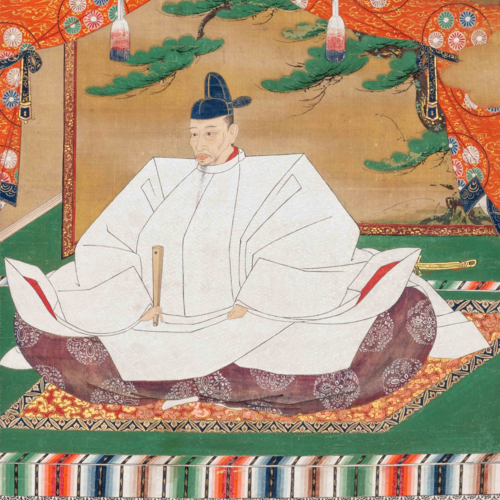 | Hideyoshi Historians frequently hypothesize that the Japanese unifier Toyotomi Hideyoshi contracted syphilis later in life, and that the disease progressed to neurosyphilis. While his exact cause of death in 1598 remains debated, this infection is widely believed to be the catalyst for the erratic and cruel behavior that marked his final years. [1, 2, 3, 4] The theory that Hideyoshi suffered from the disease—which first arrived in Japan in the early 16th century—is supported by several historical clues: [1, 2, 3, 4]
|
Syphilis Syphilis spread to Asia shortly after the European colonization of the Americas. Over the past centuries, the disease's epidemiological map shifted drastically, turning from devastating epidemics in the 16th century to near-eradication in the mid-20th century, and finally to significant recent resurgences. [1, 2, 3, 4] 16th Century: Arrival and Spread
| |
Imjin War (1592-1598) - Japan (Hideyoshi) invaded Korea on his way to take Ming China | |
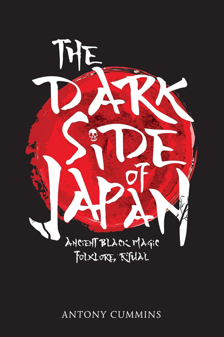 | The Dark Side of Japan is a collection of folk tales, black magic, protection spells, monsters and other dark interpretations of life and death from Japanese folklore. Much of the information comes from ancient documents, translated into English here for the first time. Antony Cummins has also searched the now forgotten Victorian volumes on Japanese mythology and explains recent academic research on Japan for the non-expert. Antony has transformed the complex information into a modern rendering, with stories and details that let a modern reader enter into the world of the forgotten legends of old Japan and the superstitions that colour them, some of which still exist today. |
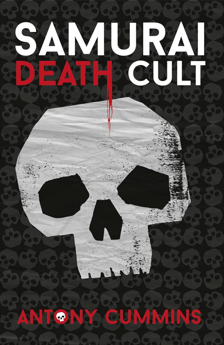 | Samurai Death Cult A fascinating look at the dark side of the noble Japanese warrior, reviewing evidence to see if the samurai was the consummate noble savage or an oppressive blood thirsty tyrant. Time to take a soul-shower, it is about to get dark. The samurai, a noble warrior fighting against oppression or a frenzied head hunter seeking his next gruesome trophy? Both images appear in popular imagination but are never reconciled, why? In this short book Antony Cummins will take you down the sinister avenues of history, unleashing the true horror of what it mean to be a warrior in feudal Japan, ignoring: trends in history, political correctness and ethical debate. Instead the bare facts are revealed, exposing the reality of what it means to be young, bored and given a sword. The samurai were Japan’s child soldiers, brought up in a position of power, elevated to the status of man, warrior and leader before they were even half way though their teens. While school children today walk to their long list of dull classes, a teenager in old Japan was taught: decapitation, ritual disembowelment, esoteric magic, animal sacrifice, murder, assassination, political intrigue and in many cases were subject to intensive indoctrination. There is no wonder then why Japan is full of stories of butchery and bloodlust, of atrocity and violence. Where then does the predominant image of the trusty and nobble warrior come from and how can these two reflections of the world’s most famous warrior be accurate? |
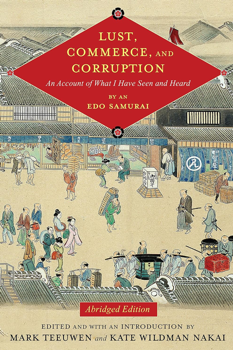 | Criticism from a samurai By 1816, Japan had recovered from the famines of the 1780s and moved beyond the political reforms of the 1790s. Despite persistent economic and social stresses, the country seemed headed for a new period of growth. The idea that the shogunate would not last forever was far from anyone's mind. Yet, in that year, an anonymous samurai produced a scathing critique of Edo society. Writing as Buyo Inshi, "a retired gentleman of Edo," he expressed in An Account of What I Have Seen and Heard a profound despair with the state of the realm. Seeing decay wherever he turned, Buyo feared the world would soon descend into war. In his anecdotes, Buyo shows a sometimes surprising familiarity with the shadier aspects of Edo life. He speaks of the corruption of samurai officials; the suffering of the poor in villages and cities; the operation of brothels; the dealings of blind moneylenders; the selling and buying of temple abbotships; and the dubious strategies seen in law courts. Perhaps it was the frankness of his account that made him prefer to stay anonymous. |
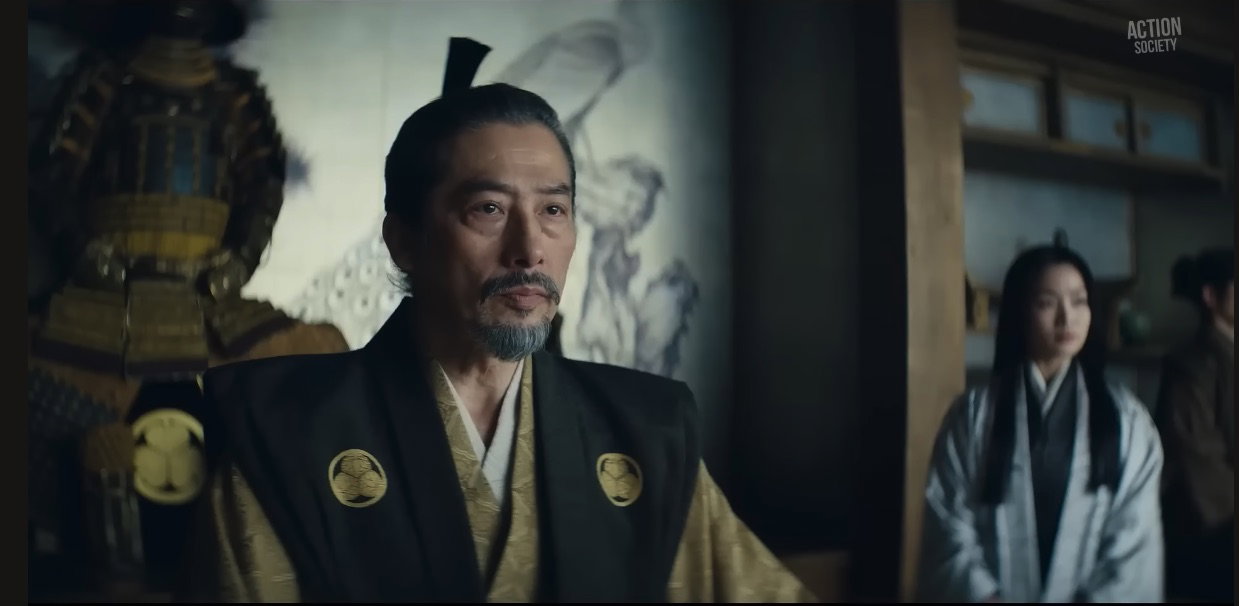 | Shogun Blackthorne (William Adams) meets Toranaga (Tokugawa) No one spoke English in Japan in the year 1600. So, in the Shogun drama, whenever anyone is speaking English it means they were actually speaking in Portuguese. The English navigator (of a Dutch fleet) William Adams was fluent in Portuguese when he arrived in Japan in 1600. His Dutch ship happened to land at a small part of Kyushu island that was controlled by the Tokugawa clan. This is how Adams ended up with Tokugawa rather than with another daimyo (land lord). |
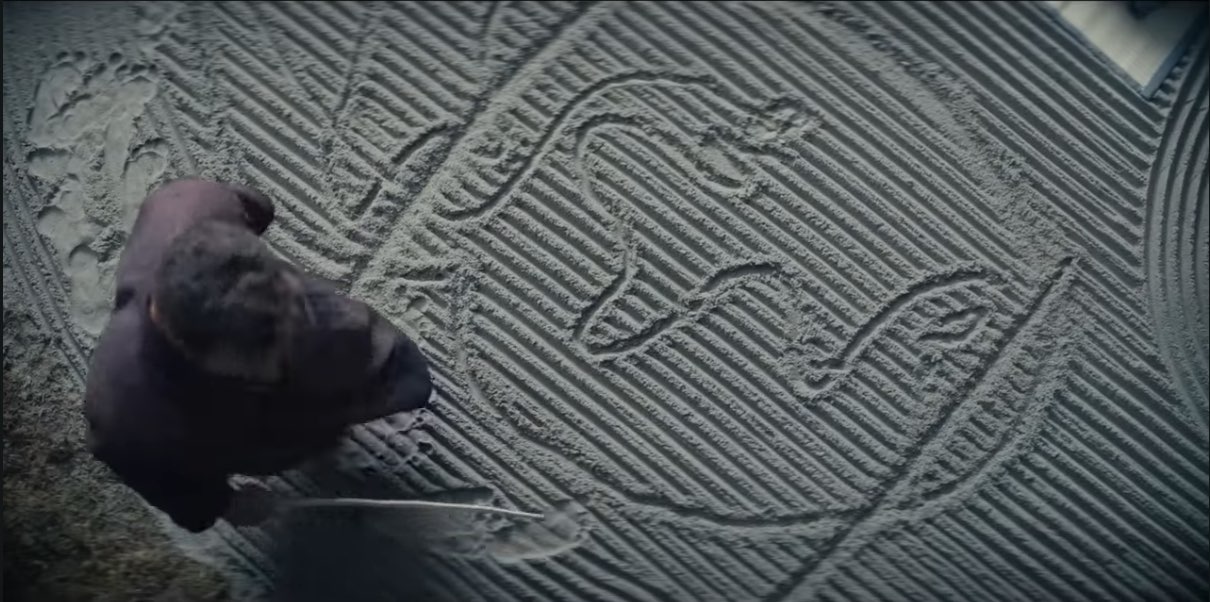 | Shogun Blackthorne (Adams) draws a map of the world for Toranaga (Tokugawa) The term "Taiko" refers to "ruler", but specifically it was the title used for Hideyoshi, who came before Tokugawa. Hideyoshi was known as Taiko because he was not actually Shogun. |
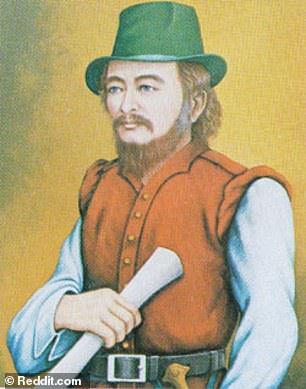 | William Adams (samurai) was an English navigator who, in 1600, became the first Englishman to reach Japan (while serving as navigator for a Dutch fleet). He was later granted samurai status, and was recognised as one of the most influential foreigners in Japan during the early 17th century. Adams was fluent in Portuguese, which allowed him to communicate with the Portuguese Christian translators at first. He then became fluent in Japanese, to commincate directly with Tokugawa Ieyasu. |
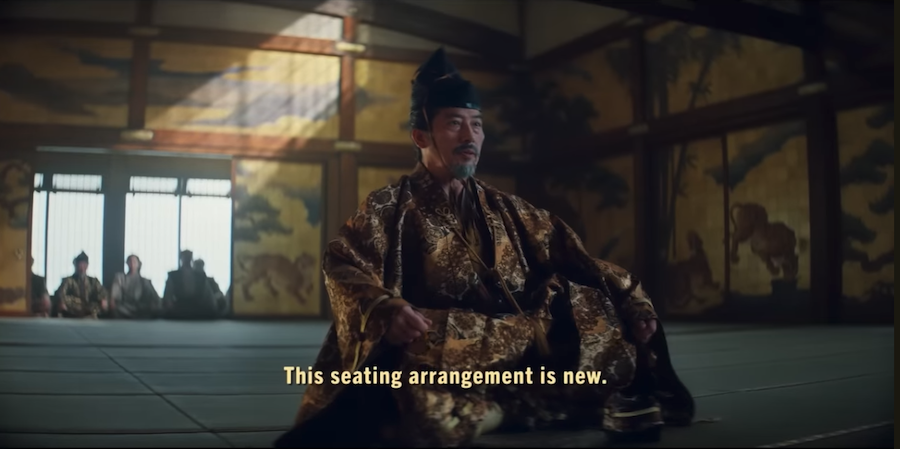 | Shogun Toranaga (Tokugawa) at Council of Regents After Hideyoshi's (Taiko) death in 1598, a council of regents assumed control of Japan until Hideyoshi's only son was old enough to become ruler (Taiko). During this time, Tokugawa Ieyasu had many enemies, and he didn't trust the council. Tokugawa belived Japan would soon fall into more civil war and chaos because the council members all wanted to be Shogun themselves. Tokugawa was very cautious with the council, but he was also plotting to overthrow their power, take control over Hideyoshi's son, and eventually make himself Shogun. It was more than just a selfish plan. Tokugawa truly beileved that unless there was a new Shogun soon, Japan would fall into more chaos. As a strong believer of Sun Tzu, Tokugawa believed war was NOT sustainable and it would make Japan terribly weak. He believed, as did his allies and supporters, that only he had the ability to become Shogun. |
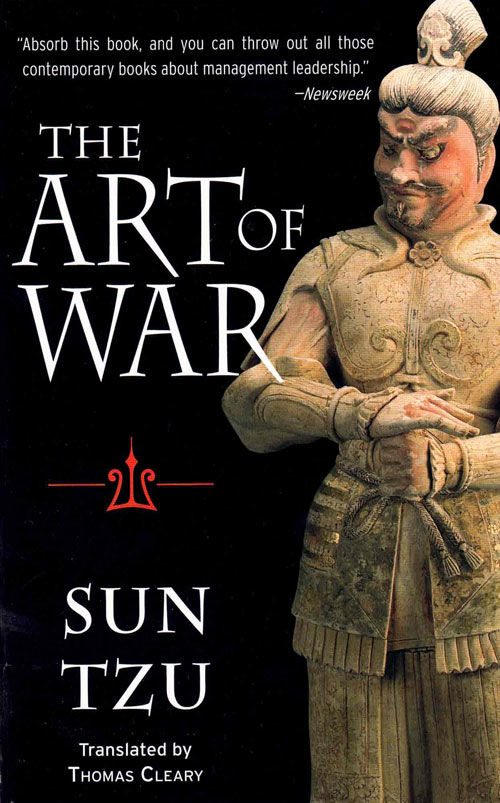 | The Art of War by Sun Tzu Chinese philosophy of war and strategy followed closely by Tokugawa Ieyasu (1543-1616) of Japan The Art of War is an ancient Chinese military treatise attributed to the strategist Sun Tzu. Written around the 5th century BCE, it consists of 13 chapters, each outlining principles for military strategy, espionage, and preparation. Today, its lessons on outmaneuvering opponents and risk management are widely applied to business, law, and everyday conflict. The book's core philosophy centers on a few fundamental concepts:
|
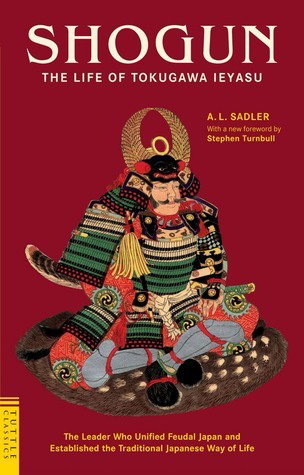 | Tokugawa Ieyasu One of the most successful rulers in Japanese history and one of the most cunning military strategists in world history, Tokugawa Ieyasu overcame countless dangers and intrigues in his country's most violent age to become the man who finally united all of Japan. |
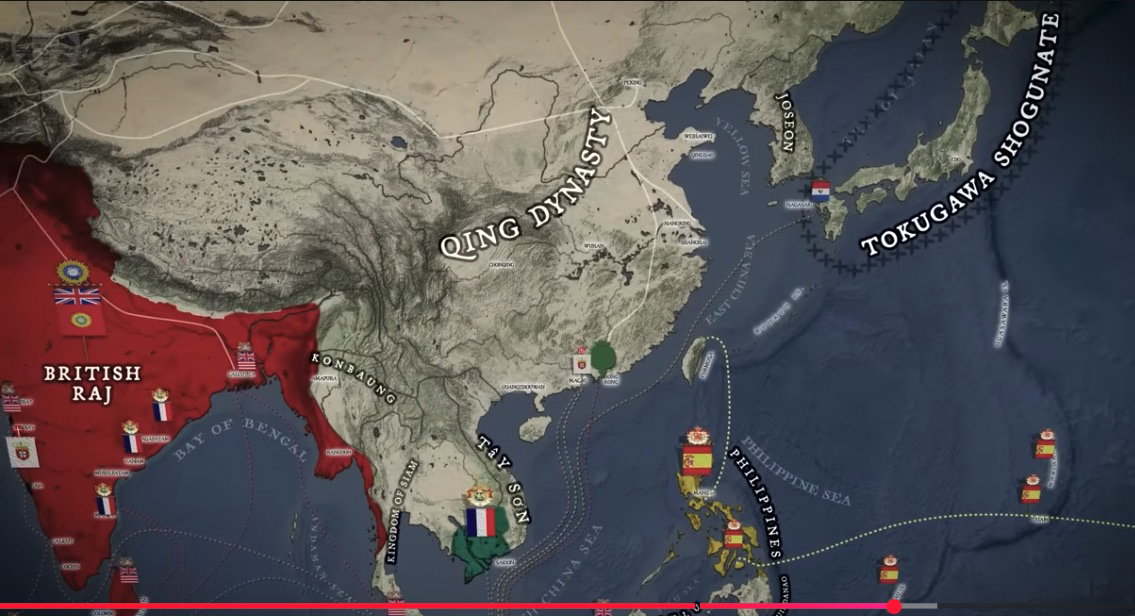 | Europe Colonized Asia Video map on colonization of Asia |
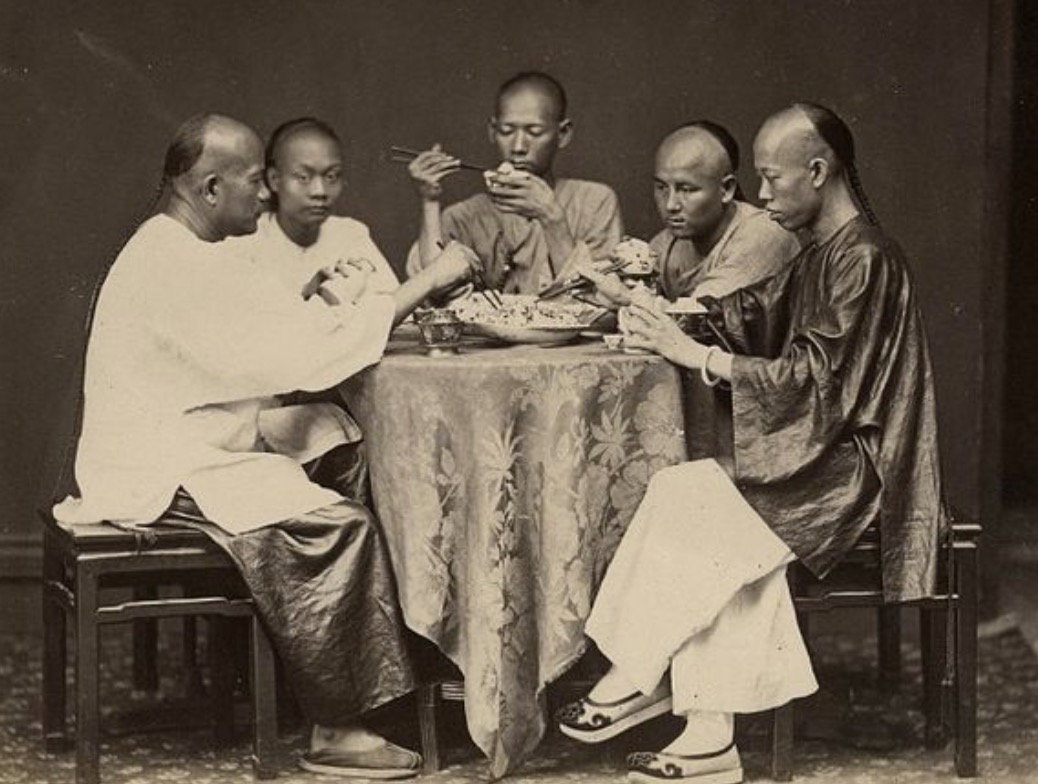 | Manchu/Jurchen (Qing empire) The REQUIRED by law hairstyle for Manchu (Qing) empire men |
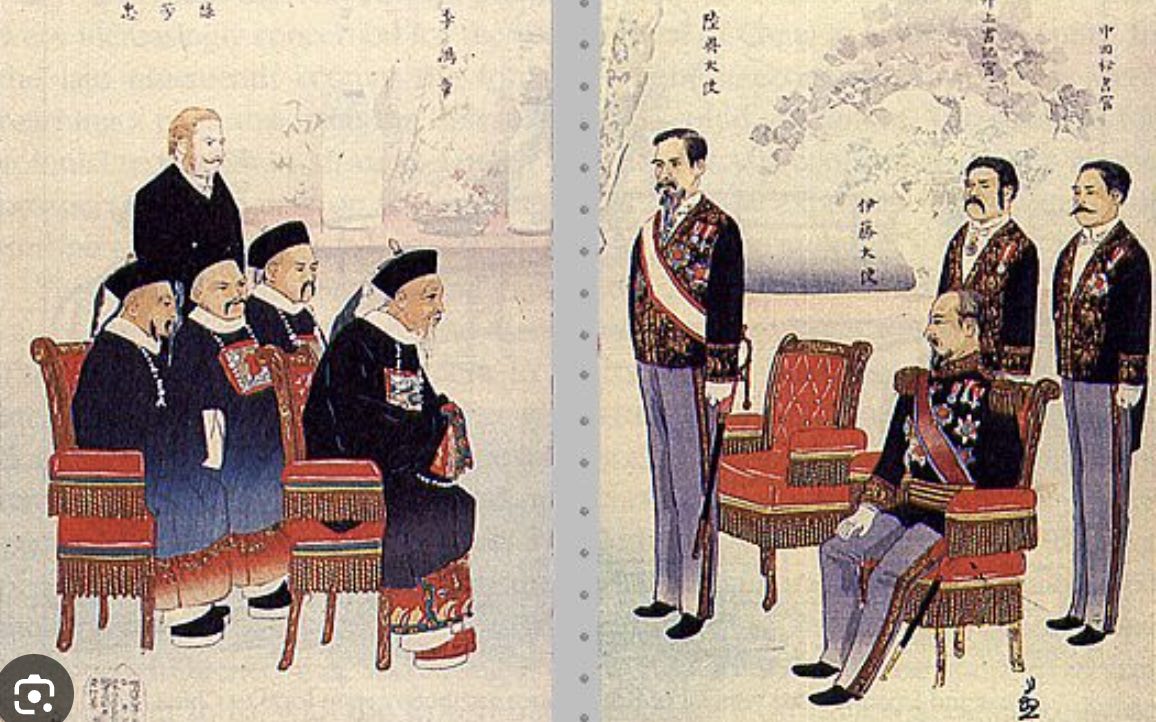 | Chinese vs. Japanese c. 1890 Who is "more civilized"? In the Western perspective form the 19th century onward, China was shown as an old, backward society, whereas Japan was becoming a modern (Western) civilization. This biased, imperial Western view of China vs. Japan has remained at the core of anti-Chinese and pro-Japanese views of East Asia since the 1800s. |
| GENETIC ANCESTRY of PRESENT-DAY JAPANESE Tripartite admixture of modern Japanese population | |
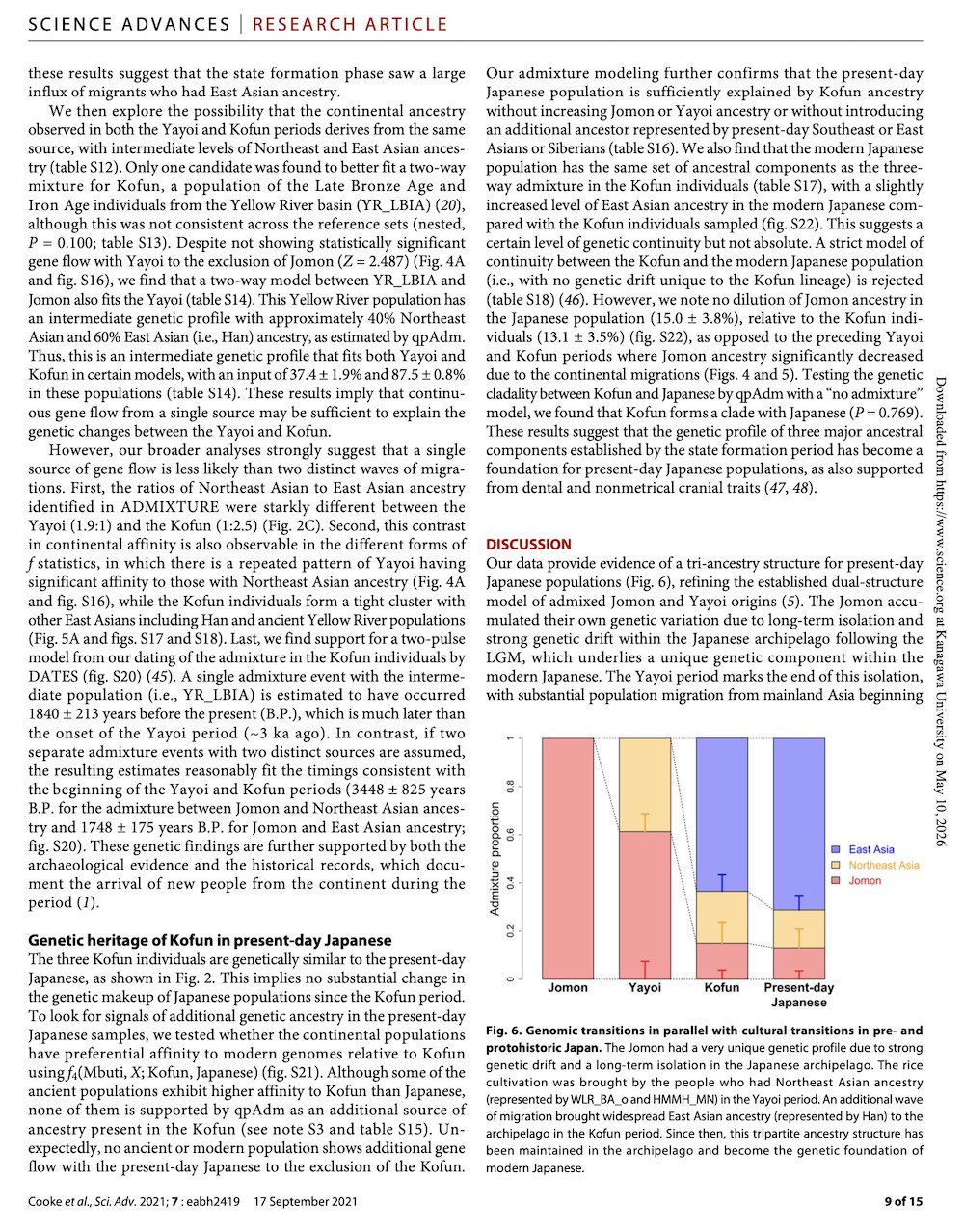 | Tripartite admixture.pdf Kofun period 古墳時代 "The Land of Wa" (c. 250 CE to 600 CE) Yayoi period 弥生時代 (c. 300 BCE to 300 CE) Jomon period 縄文 時代 (c.14,000 to 300 BCE) |
| GENETAIC ADMIXTURE in CHINA Coastal populations in China - Genetic Ancestry (admixture) https://www.nature.com/articles/s41467-025-56555-w | |
| Korea-Three Kingdoms maps | |
2026 01_2026年度 学年暦【学部及び大学院】.pdf
| |
September 28 [week 1] (15:20~17:00)Japan: General Themes in History -Various themes from ancient times to the present -Economic History of Japan | |
October 5 [week 2] (15:20~17:00)Japan: Foreign Technologies & Influences -China, Korea, Portugal, Holland, USA -rice, tea, silk, writing, guns, Buddhism, neo-Confucianism -Tokugawa regime (bakufu); daimyo | |
October 12 [week 3] (15:20~17:00)Tokugawa Japan -Economy -police state -end of bakufu and arrival of Americans | |
October 19 [week 4] = Website (online)WEBSITE assignments (no classroom) -do assignments about Japan before 1868 | |
Outside Trip (optional)October 24 [Saturday] (09:00~12:30)Field trip to monastery (NOT required) -optional group trip to Soji-ji Buddhist monastery | |
-> Imperial Japan 1868-1945 <- | |
October 26 [week 5] (15:20~17:00)Meiji Era: Industrialization 1870s~1910s -Meiji Restoration; changes to nation -Tokugawa vs. Meiji economic, political & social organization -"Western learning" through the Japanese lens -rapid industrialization; zaibatsu ("financial cliques" = monopolies) -steel; shipbuilding; textiles -wars: China & Russia; annexation of Taiwan & Korea -industrial boom due to WWI video: zaibatsu illustration (6 min.) Class PDFs | |
November 2 [week 6] (15:20~16:25)Post World War One (Part 1) - 1920s & 1930s-economy and politics after WWI; the 1920s-30s -consumer product markets: cosmetics; clothes, cars -birth of Toyota, Nissan, etc. -democracy, labor, peacetime economy 1923-36 -zaibatsu expansion -"new zaibatsu" and growth of militarism & global crises -banking crisis of 1927 (general) 昭和金融恐慌 Shōwa Kin'yū Kyōkō -Economist article: The Problem with the Meiji Period
| |
November 9 [week 7] (15:20~17:00)Post World War One (Part 2) - 1929-1945-economy and politics; the 1930s-45 -consumer product markets: cosmetics; clothes, cars -birth of Toyota, Nissan, etc. -democracy, labor, peacetime economy 1923-36 -zaibatsu expansion -"new zaibatsu" and growth of militarism & global crises -banking crisis of 1927 (general) 昭和金融恐慌 Shōwa Kin'yū Kyōkō | |
November 16 [week 8] (15:20~17:00)Asia-Pacific War 1937-45 (Japan vs. China & USA) World War Two in Asia-Pacific -Japan's wartime economy, 1937-45 -war benefits zaibatsu, Toyota, Nissan, etc. -how the war affects issues today Asia-Pacific War (1937-1945) -War 1937-1945 (map of each day: video) Bloody Saturday (baby bombed photo) -details about the relationship between Japan & USA -details about the Pacific War -U.S. campaign in the Pacific -the atomic bombs and impact -"Downfall" by Richard Frank (End of the Japanese Empire) -Asia-Pacific War: Death Tolls & Actual Focus -WWII in the Pacific (1941-1945) | |
-> Japan after 1945 <- | |
November 23 [week 9] (15:20~17:00)To understand Japan today, it is important to understand Japan after 1945.1945-1960: Postwar occupation and recovery -current economic complexity - Japan -economic and political rebuilding (economic & political ideologies) -new constitution (1947) and industrial institutions (zaibatsu -> keiretsu) -polarized region: Cold War: China & USSR vs. USA, Japan, allies -developing close ties with the U.S. -war in Korea drives recovery in Japan -NTT from AT&T -birth of Sony, Honda, & Japan becomes exporter | |
November 30 [week 10] = Website (online)Two videos: about postwar Japan & about SONY --web assignments | |
December 7 [week 11] (15:20~17:00)1960s & 1970s-High-Growth Period of 1960s-70s -two economies: old industrialist vs. new consumerist -the new efficient business model -the new Japanese management model (Meyer's Culture Map) -Toyota Production System -creating the world's 2nd largest GDP | |
December 14 [week 12] (15:20~17:00)Bubble economy バブル経済 (1980s-90s)-Japan's economy in the 1980s-90s -management styles & philosophies -effects on Japan since year 2000 | |
December 21 [week 13] (15:20~17:00)Entertainment industry (exporting)-entertainment industry (exports) -film, anime & manga (industrial report) | |
December 28 & January 4 & 11 are holidays: no KU classes | |
January 18 [week 14] = Website (online)-themes and topics from history that are important today -working in Japan today -women in business and politics -working, labor: career statistics -Japanese women in the arts -geisha [geiko] vs. maiko -Japanese patriarchy & family system -family -women under the law --FINAL ASSIGNMENT due | |
 | |
Contact (email) Theron Fairchildtheron at mailfence dot com | |

Place to eat and drinkis popular with International Students |
