Japanese Women's History - Fall 2026 Week 8
Japanese Women's History: Monday 5th Period (月)5限
MONDAY
Japanese Women's History (Fall 2026)
下記の方法に従うこと
READ THE DIRECTIONS
WEEK 8Women's HistoryNovember 16 [月] ~ November 22 [日] |
2026 Fall SemesterJapanese Women's History(Monday) 5th period15:20~17:00 [14 weeks] (10 classroom meetings) | ||
| Class Week | Day | Location |
| 1 | 9/28 | 6017 教室 |
| 2 | 10/5 | 6017 教室 |
| 3 | 10/12 | 6017 教室 |
| 4 | 10/19 | website only (no classroom) |
| TRIP | 10/24 (Sat.) | SOJI-JI Monastery (optional) 09:00~12:30 |
| 5 | 10/26 | 6017 教室 |
| 6 | 11/2 | website only (no classroom) |
| | 11/2 trip (optional) | YOKOHAMA on foot (not required) |
| 7 | 11/9 | 6017 教室 |
| TRIP | 11/14 (Sat.) | Kamakura tour [on foot] (optional) 09:00~12:00 & 13:00~15:00 |
| 8 | 11/16 | 6017 教室 |
| 9 | 11/23 | 6017 教室 |
| 10 | 11/30 | website only (no classroom) |
| 11 | 12/7 | 6017 教室 |
| 12 | 12/14 | 6017 教室 |
| 13 | 12/21 | 6017 教室 |
| 14 | 2026/1/18 | website only (no classroom) |
Class | ||
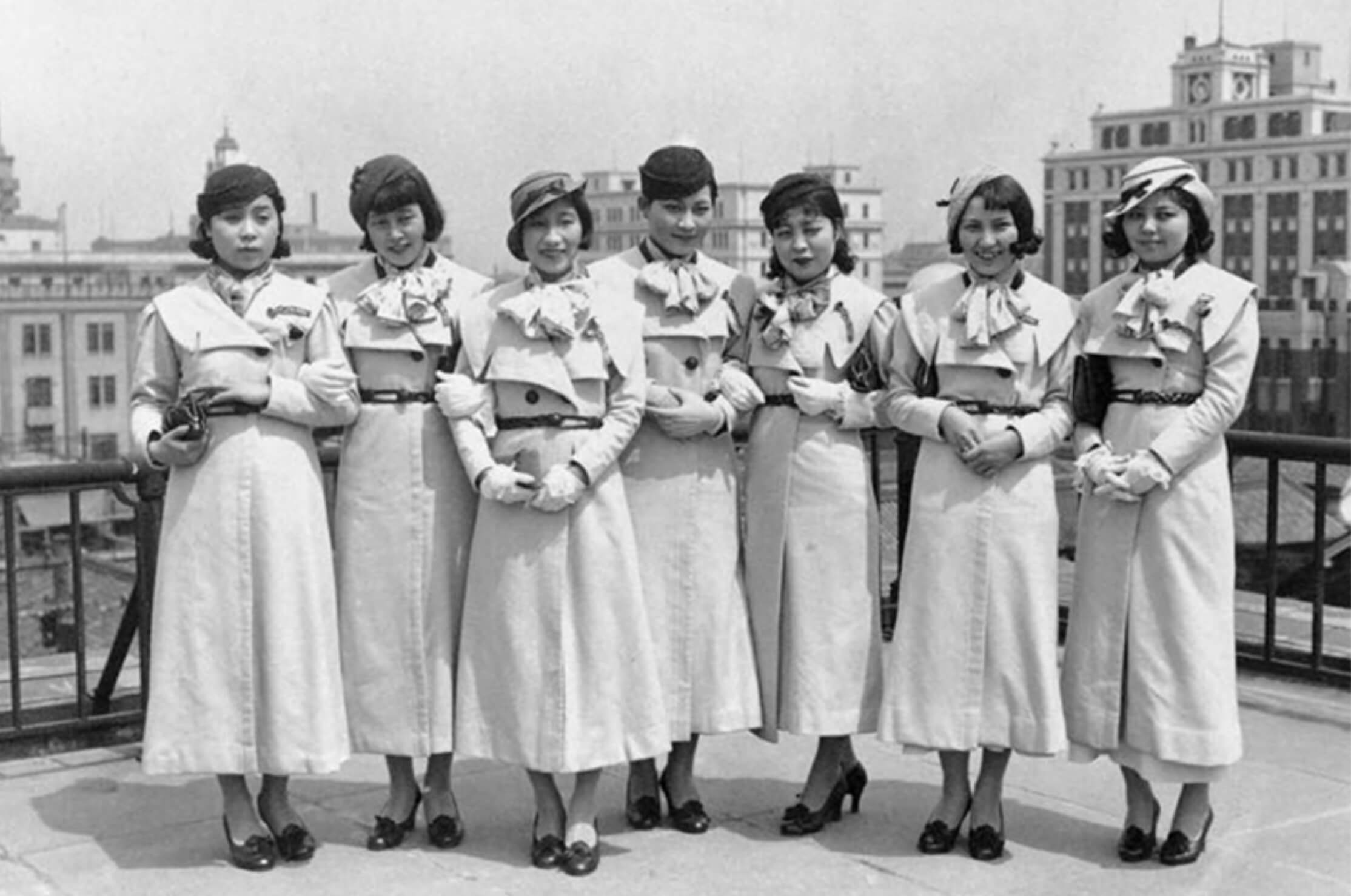 | LINKs:(1) Shiseido women(2) Moga (3) MIT - Vizualizing 1 (4) MIT - Vizualizing 2 | |
Following World War I, the economic role and social status of Japanese women underwent significant shifts, driven by wartime industrial expansion, the rise of liberal ideology, and the growth of the service and urban sectors. Expansion of the Service and Tertiary Sectors
Labor Activism and Political Consciousness
Economic Vulnerability and Limitations
| ||
SECTION 1: ReadingREQUIRED AssignmentComplete : 提出期限 November 15 (10pm) (Sunday) 11月15日 (22:00) (日) | ||
| -Task 1: Read the two webpages -Task 2: Do the assignment | ||
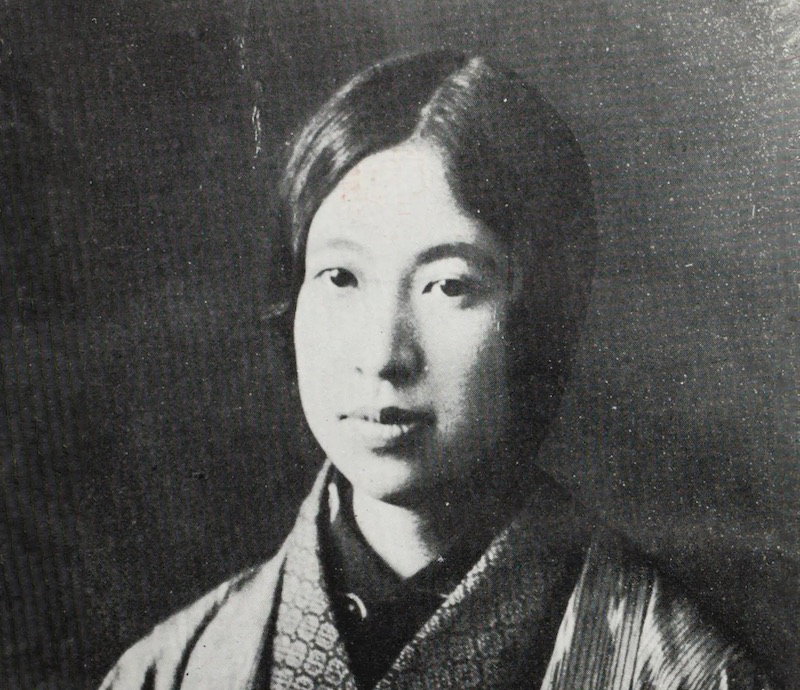 | LINKs:(1) https://unseen-japan.com/feminist-movement-in-japan-meiji-wwii/(2) https://www.tokyoweekender.com/art_and_culture/history/japanese-feminists-history/ 1. Early Feminism課題 リーデイング REQUIRED | |
https://www.tokyoweekender.com/art_and_culture/history/japanese-feminists-history/ | ||
Murasaki Shikibu |
Lady Murasaki (c. 973 - c. 1014) |
| Murasaki is one of the most famous writers in Japanese and world history. https://en.wikipedia.org/wiki/Murasaki_Shikibu |
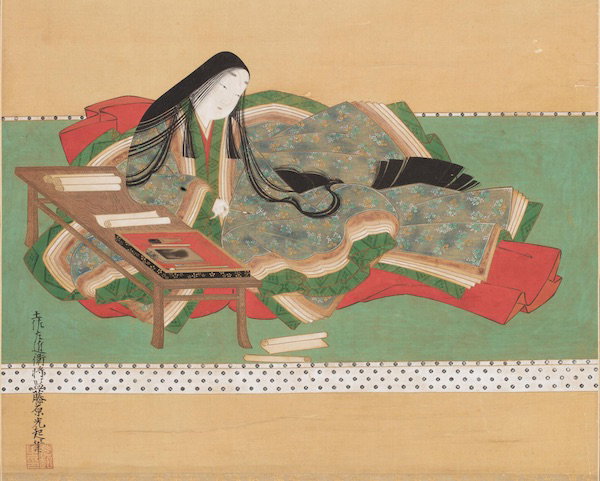 |
Heian women were traditionally excluded from learning Chinese, the written language of government, but Murasaki, raised in her erudite father's household, showed a precocious aptitude for the Chinese classics and managed to acquire fluency. She married in her mid-to-late twenties and gave birth to a daughter, Daini no Sanmi. Her husband died after two years of marriage. It is uncertain when she began to write The Tale of Genji, but it was probably while she was married or shortly after she was widowed. In about 1005, she was invited to serve as a lady-in-waiting to Empress Shōshi at the Imperial court by Fujiwara no Michinaga, probably because of her reputation as a writer. She continued to write during her service, adding scenes from court life to her work. After five or six years, she left court and retired with Shōshi to the Lake Biwa region. Scholars differ on the year of her death; although most agree on 1014, others have suggested she was alive in 1025. |
 | |
Contact (email) Theron Fairchildtheron at mailfence dot com | |
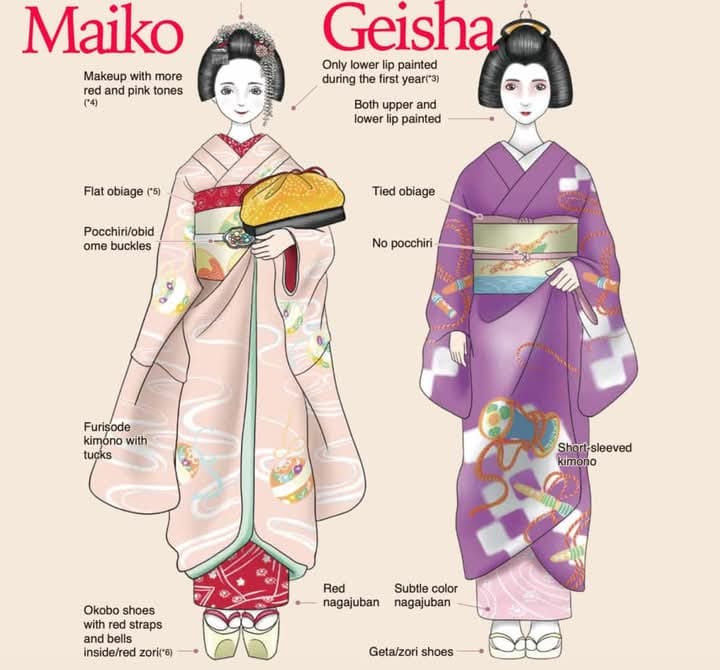
| Geisha (Geiko) vs. Maiko Geisha (Tokyo) / Geiko (Kyoto) | |
| Kyoto Theater (Geisha & Maiko performances) Geisha & Maiko on stage together @3:00 | |
| Kyoto: Senior Maiko Perfromance with Senior Geisha Musician | |
| Makeup of Low-Ranking (Junior) Geisha Makeup @7:15; Junior & Senior together @14:45 | |
 | |
| Geisha Early Beginnings (1730s–1750s)
| |
| Noh Drama - Demon Plays (influence on anime) Noh is very stylized: masks and sound are important | |
| Kabuki - Boy Actor Kabuki emerged during the Edo period (stylized dance and costumes) | |
| Butoh: Post-Modern Dance Essentilist physical expressionism but borrows traditional Noh and Kabuki characteristcs | |
| Butoh Group: Water Dance | |
| Kodo - O-Daiko | |
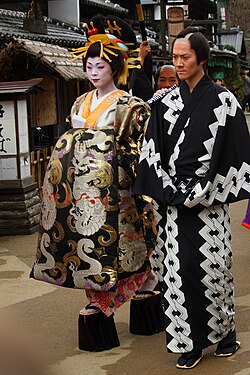
| Yujo (遊女 = prostitute) vs. Oiran (花魁 = courtesan) | |
 | |
| Oiran vs. Geisha | |
Oiran were historically considered higher in social status and price than regular geisha during the Edo period, though they belonged to completely different professions. Key Differences:Oiran (花魁): Elite, high-ranking courtesans in licensed pleasure quarters who combined traditional arts with sexual companionship. They were fashion icons and extremely expensive, sometimes costing a regular worker's yearly salary for a visit. The profession died out by the end of the 19th century. Geisha (芸者): Professional performing artists who specialized in music, dance, games, and conversation, and were strictly forbidden from prostitution. When geisha first emerged, they were actually restricted from competing with or outshining the higher-status oiran. Over time, as the licensed pleasure quarters declined and prostitution was outlawed, the oiran vanished, while the artistic Geisha tradition survived into the modern era. | |
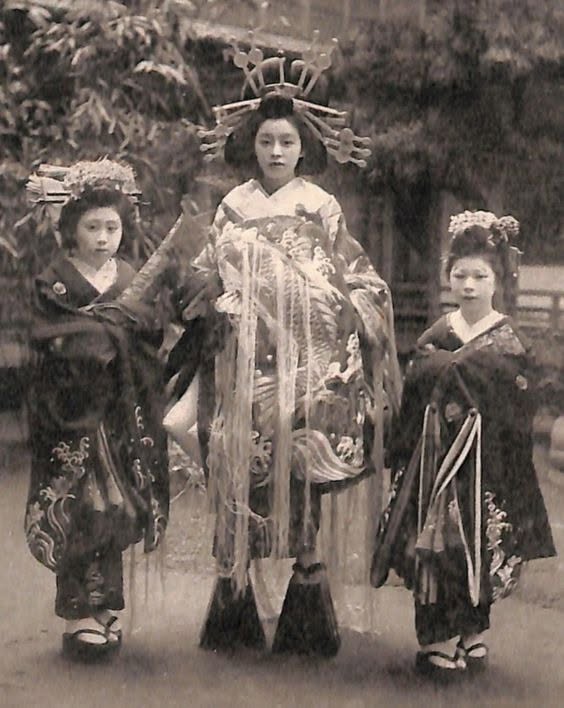 | |
A girl typically debuted as a full oiran at about age 17, after beginning her training as a young child. The Timeline of an Oiran's Life:
| |
Japan has had eight historical female emperors (known as josei tennō or empresses regnant) ruling across ten distinct reigns. All historical female monarchs belonged to the paternal male bloodline of the imperial family, often ascending the throne as transitional or stabilizing rulers when male heirs were too young or succession was contested. The List of Female Emperors
|

Yujo (遊女 = prostitute) vs. Oiran (花魁 = courtesan)(4) MIT - Vizualizing 2