Japanese Women's History - Fall 2026 Weeks 1 & 2
Japanese Women's History: Monday 5th Period (月)5限
MONDAY
Japanese Women's History (Fall 2026)
下記の方法に従うこと
READ THE DIRECTIONS
WEEKS 1-2Women's HistorySeptember 28 [月] ~ October 11 [日] |
2026 Fall SemesterJapanese Women's History(Monday) 5th period15:20~17:00 [14 weeks] (10 classroom meetings) | ||
| Class Week | Day | Location |
| 1 | 9/28 | 6017 教室 |
| 2 | 10/5 | 6017 教室 |
| 3 | 10/12 | 6017 教室 |
| 4 | 10/19 | website only (no classroom) |
| TRIP | 10/24 (Sat.) | SOJI-JI Monastery (optional) 09:00~12:30 |
| 5 | 10/26 | 6017 教室 |
| 6 | 11/2 (trip OR web assignment) | YOKOHAMA on foot OR web assignment |
| 7 | 11/9 | 6017 教室 |
| TRIP | 11/14 (Sat.) | Kamakura tour [on foot] (optional) 09:00~12:00 & 13:00~15:00 |
| 8 | 11/16 | 6017 教室 |
| 9 | 11/23 | 6017 教室 |
| 10 | 11/30 | website only (no classroom) |
| 11 | 12/7 | 6017 教室 |
| 12 | 12/14 | 6017 教室 |
| 13 | 12/21 | 6017 教室 |
| 14 | 2026/1/18 | website only (no classroom) |
SECTION 1Student InformationREQUIREDComplete : 提出期限October 11 (10pm) (Sunday) 10月11日 (22:00) (日) | ||
| Please provide a working email address. | ||
 | 1. Student InformationPlease provide an email address that you want to use for contact with Theron Fairchild. | |
FIELD TRIP 01NOT Required, but can use this trip for class credit. October 24 (Saturday) 09:00~12:30總持寺09:00 MEETING LOCATION: 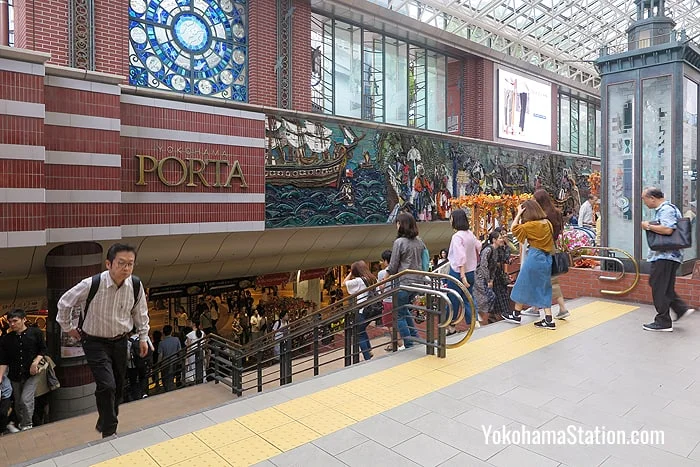 PORTA Escalators in Yokohama Station | ||
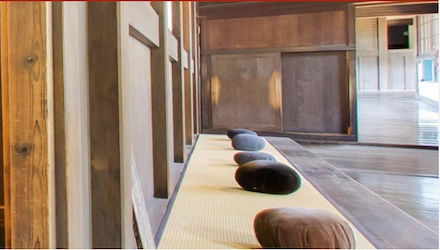  | Sōji-ji Zen Monastery (Wikipedia) 總持寺 (ウィキペディア) Sōji-ji (總持寺) is one of two daihonzan (大本山, "head temples") of the Sōtō school of Zen Buddhism. The other is Eihei-ji temple in Fukui Prefecture. Fodor's calls it "one of the largest and busiest Buddhist institutions in Japan." | |
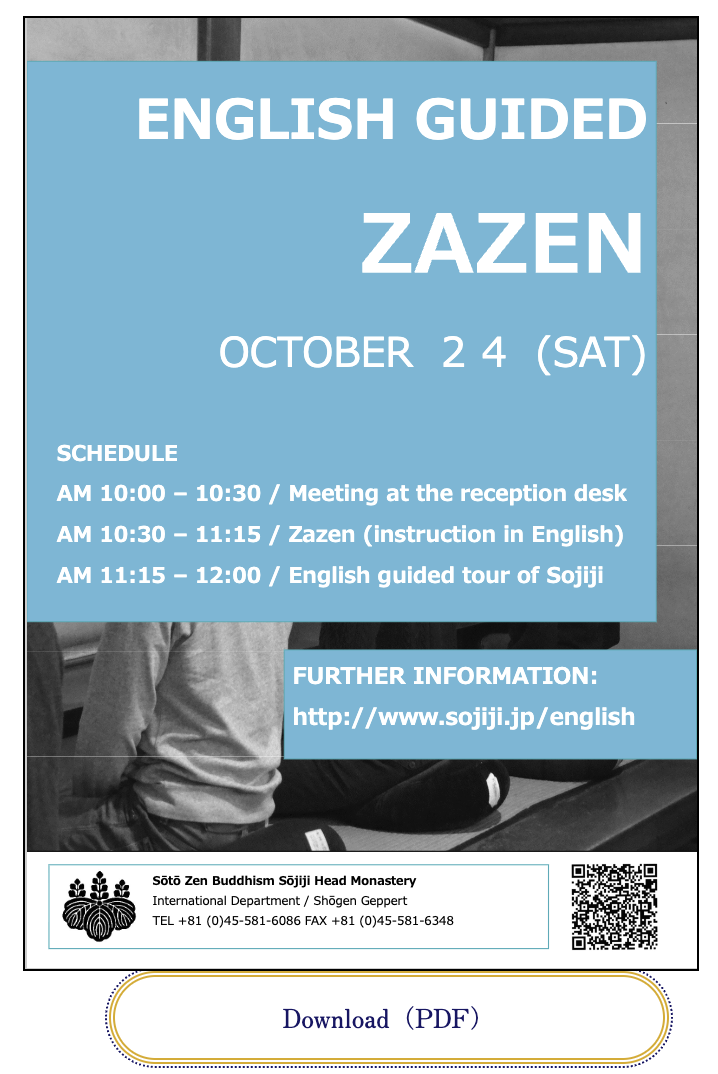
Japanese Soto Zen Buddhism is the most famous form of Zen in the world, since it was the first form to be exported from Japan to the West. As a result, Soto zen has an international focus. This field trip will include 45 minutes of an English introduction to Zazen, which is zen-style meditation. Then we will take a guided tour of the temple in English. The cost at the temple is ¥500. By train and on foot, the monastery is about 40 minutes from Yokohama Station. --WEAR CLEAN & COMFORTABLE CLOTHES-- October 24 09:00 October 24 (Saturday)English-Guided-Zazen-October-2026.pdf | ||
NOT RELIGIOUS - This trip is about CULTURE. If you are worried, this trip is NOT about religion. It is a tour of the temple and a basic introduction on how to meditate quietly in the Soto zen style. This is a recurring event open to the public. The focus is basic and practical. There is no religious requirement. It's mostly a way to experience a part of Japan's history. There is no easy way to explain zen, so it's best to experience it with your body. There will be a tour of the monastery afterward. Please don't worry about religious things or strict rules. That level of zen is only for advanced learners. We are just a friendly basic group. | ||
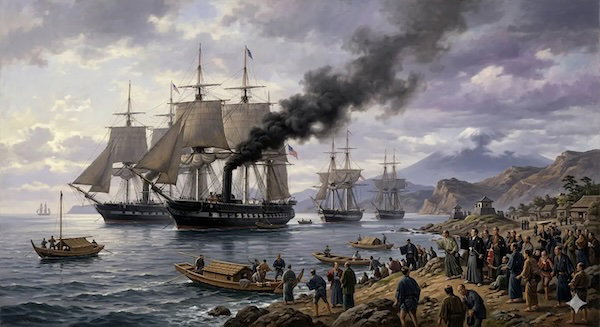
FIELD TRIP 02YOKOHAMA HISTORY on foot November 2 (Monday) 17:10~18:5017:10 MEETING LOCATION:KU CAMPUS CLASSROOM 6017 | |||
 |
| ||
--WEAR WALKING SHOES -- November 2 17:10 November 2 (Monday) | |||
This tour is not required. But students receive credit for attending. Tokugawa/Edo isolationist policy (sakoku) | |||
FIELD TRIP 03NOT Required, but can use this trip for class credit. November 14 (Saturday)09:00~12:30 & 13:00~15:1509:00PORTA Escalators in Yokohama Station 09:00~15:15鎌倉 | ||
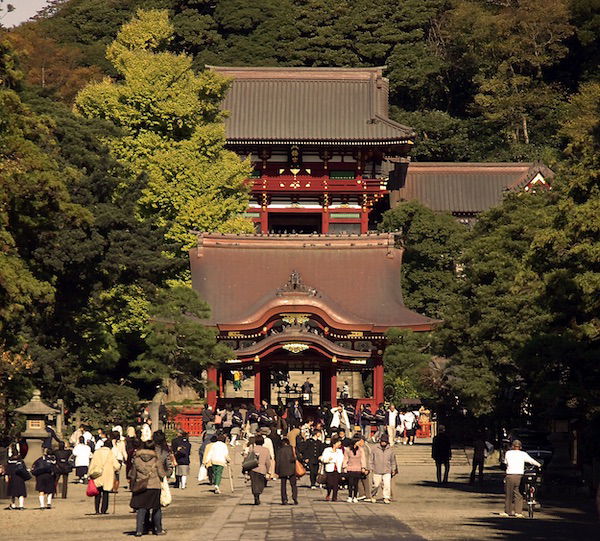 | KAMAKURABring about ¥1000 cash because some spots have a small entrance charge.And you might want to eat some food or buy souvenirs, so have some money for that. | |
November 14 (Saturday)09:00~12:30 & 13:00~15:15This is a short historical tour (on foot) around Kamakura, which was the center of power in Japan from 1185 to 1333 CE. Anyone can attend, not just my students. If you only want to stay half a day, you can leave the trip after 12:30. We will return to Kamakura Station at around 12:30. 09:00 we'll meet at Yokohama Station and travel to Kamakura 09:30~12:30 walk around main shrine of Hachimangu and downtown apx. 12:30 return to station area. There is a McDonald's and convenience stores for a quick lunch. 13:00~15:00 we'll take the Enoshima line to visit Hasadera (temple) and finally the Big Buddha. 15:15 we should be back at the local Hasadera station by apx. 15:15 Saturday, November 14 | ||
Students can use this field trip for class credit. | ||
 | |
Contact (email) Theron Fairchildtheron at mailfence dot com | |
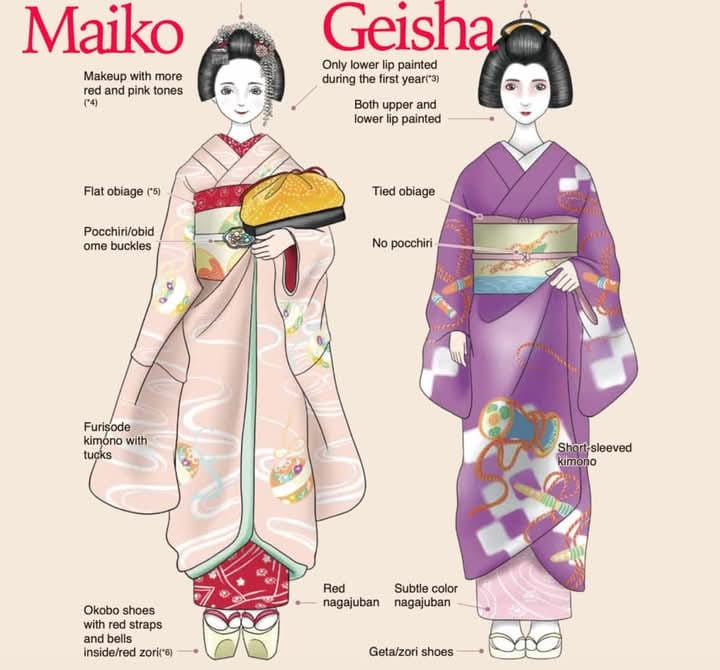
| Geisha (Geiko) vs. Maiko Geisha (Tokyo) / Geiko (Kyoto) | |
| Kyoto Theater (Geisha & Maiko performances) Geisha & Maiko on stage together @3:00 | |
| Kyoto: Senior Maiko Perfromance with Senior Geisha Musician | |
| Makeup of Low-Ranking (Junior) Geisha Makeup @7:15; Junior & Senior together @14:45 | |
 | |
| Geisha Early Beginnings (1730s–1750s)
| |
| Noh Drama - Demon Plays (influence on anime) Noh is very stylized: masks and sound are important | |
| Kabuki - Boy Actor Kabuki emerged during the Edo period (stylized dance and costumes) | |
| Butoh: Post-Modern Dance Essentilist physical expressionism but borrows traditional Noh and Kabuki characteristcs | |
| Butoh Group: Water Dance | |
| Kodo - O-Daiko | |
| Yujo (遊女 = prostitute) vs. Oiran (花魁 = courtesan) | |
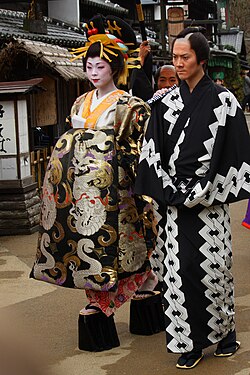 | |
| Oiran vs. Geisha | |
Oiran were historically considered higher in social status and price than regular geisha during the Edo period, though they belonged to completely different professions. Key Differences:Oiran (花魁): Elite, high-ranking courtesans in licensed pleasure quarters who combined traditional arts with sexual companionship. They were fashion icons and extremely expensive, sometimes costing a regular worker's yearly salary for a visit. The profession died out by the end of the 19th century. Geisha (芸者): Professional performing artists who specialized in music, dance, games, and conversation, and were strictly forbidden from prostitution. When geisha first emerged, they were actually restricted from competing with or outshining the higher-status oiran. Over time, as the licensed pleasure quarters declined and prostitution was outlawed, the oiran vanished, while the artistic Geisha tradition survived into the modern era. | |
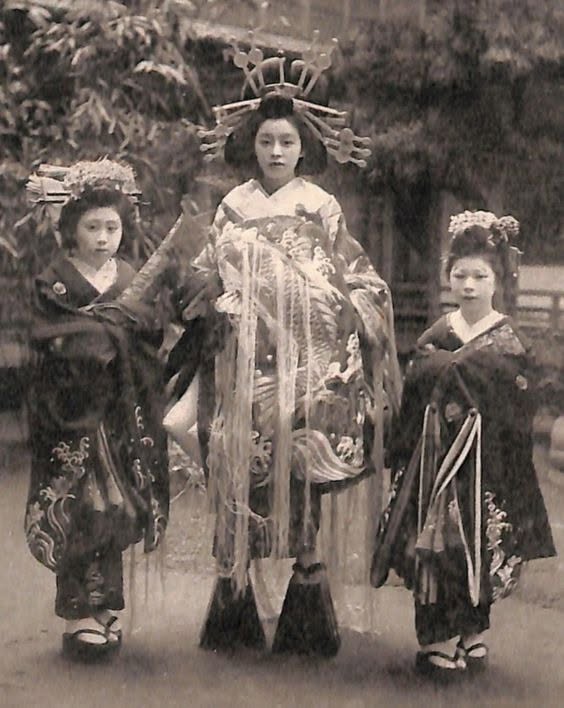 | |
A girl typically debuted as a full oiran at about age 17, after beginning her training as a young child. The Timeline of an Oiran's Life:
| |